
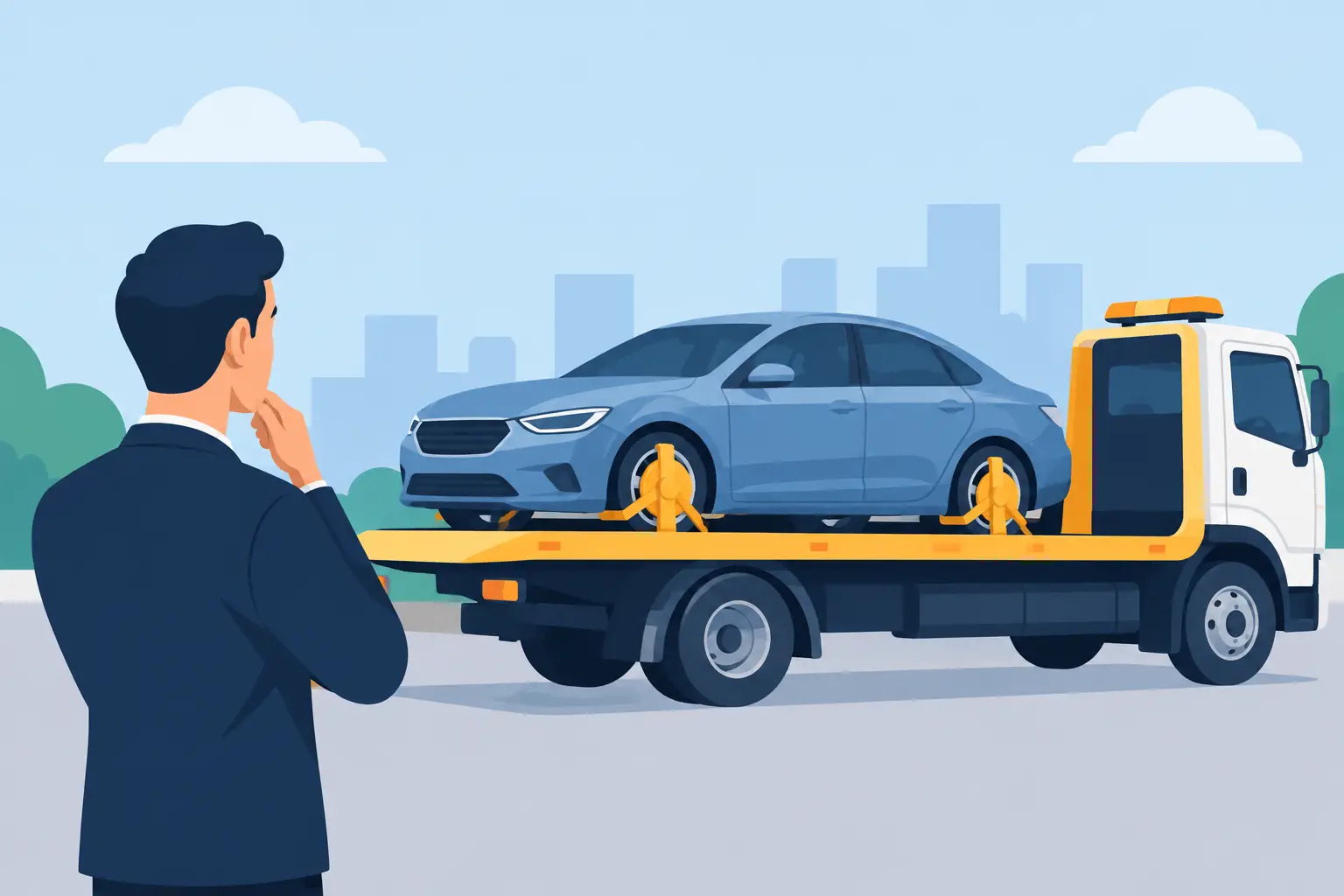
A car that will not start can become a costly problem fast. It takes up room in the driveway, attracts complaints from family or neighbours, and cannot simply be driven to a buyer. So, can buyers collect immobilised cars? Yes. A reputable car buyer can arrange collection with the right towing equipment, pay you on the spot and remove the vehicle without charging you for the tow.
For owners across Brisbane and South East Queensland, that means a dead, damaged or unregistered vehicle does not have to sit there for months while you try to organise transport or find a private buyer.
Can buyers collect immobilised cars from your property?
Yes, provided you are the legal owner and the vehicle can be accessed safely. Car removal buyers regularly collect vehicles that cannot be driven, including old sedans with seized engines, utes with flat batteries, accident-damaged cars, flood-affected vehicles and repairable write-offs.
The collection method depends on the car’s condition and where it is parked. A tilt tray is often used for vehicles that cannot move under their own power. If the car rolls but will not start, it may be winched onto the truck. Even cars with flat tyres, missing keys or mechanical faults can often be removed with the right preparation.
You should not have to pay for transport just because the vehicle is immobilised. With a proper cash-for-cars service, the quote includes collection. There is no separate towing invoice, no need to call a tow truck yourself and no surprise fee once the driver arrives.
What counts as an immobilised car?
An immobilised vehicle is simply one that cannot be legally or safely driven away. That can mean a car that will not start, but the issue is often more serious than a flat battery.
Common examples include vehicles with failed engines or gearboxes, accident damage, blown tyres, electrical faults, missing parts, severe rust, flood damage or expired registration. A car may also be immobilised because it has been parked for years and is no longer roadworthy.
Buyers who specialise in unwanted and damaged vehicles assess value differently from a private buyer. They may consider reusable parts, scrap metal, make, model, demand for components and the condition of salvageable materials. That is why a non-running car can still be worth cash.
The location of the vehicle matters
Most immobilised cars are straightforward to collect from a driveway, garage forecourt, workplace, car park or street with safe truck access. Tell the buyer exactly where the vehicle is when requesting a quote. A clear description prevents delays and helps the removal team bring the correct equipment.
Access can be more complicated if the car is behind another vehicle, stuck in a tight carport, parked on soft ground or blocked by a locked gate. A vehicle in an underground car park may need special arrangements because of height limits. This does not always stop collection, but it needs to be discussed before booking.
Be upfront about the condition too. Mention if the wheels are locked, tyres are flat, the steering is damaged, keys are unavailable or the car has been in a major crash. Honest details lead to the right tow truck arriving the first time. That keeps the job quick and protects the agreed price from avoidable confusion.
What you need before an immobilised car is collected
The process is simple, but the buyer must be satisfied that you have the right to sell the vehicle. In most cases, you will need photo identification and proof of ownership or registration details. If the car is registered in someone else’s name, have the proper authority in place before arranging collection.
Remove your personal belongings from the glove box, centre console, boot, door pockets and under the seats. Check for toll tags, paperwork containing personal information, house keys, tools, baby seats and spare items you want to keep. Once the vehicle is loaded, getting something back is not always possible.
If you have the keys, hand them over at collection. If they are lost, say so when you request your quote. Missing keys do not automatically rule out removal, but the buyer needs to know in advance.
For registered vehicles, check what is required to cancel the registration or transfer ownership in Queensland. Keep records of the sale and collection for your own peace of mind. Good paperwork protects both sides and ensures the car is no longer your responsibility after it leaves.
How collection and payment usually work
The best part of selling an immobilised vehicle to a specialist buyer is that there is no private-sale runaround. You do not need to advertise a car that cannot be test-driven, wait around for strangers or spend money getting it to a mechanic just to find out it is not worth repairing.
The process is usually three steps and it is over.
First, provide the vehicle details: make, model, year, location, condition and whether it starts or rolls. Photos can help, particularly for accident damage or access issues. You receive a quote based on the information supplied.
Next, agree on a suitable collection time. Same-day or next-day pickup may be available depending on location, vehicle access and tow truck availability. A reliable buyer will give you a clear timeframe rather than leaving you waiting all day.
Finally, the driver checks the vehicle, completes the paperwork, pays the agreed amount and loads it for removal. Top Cash Car Buyers makes this a straightforward arrangement for unwanted vehicles across the region: free pickup, instant payment and no hidden surprises.
Will you get less money because the car cannot move?
Sometimes, but not always. An immobilised vehicle generally has a smaller pool of buyers than a running one, and towing costs, damage and missing parts can affect its value. A car with a failed engine may be worth less than the same model in running condition.
However, it is not simply a matter of calling the car worthless. Late-model vehicles can have valuable panels, interiors, electronics, wheels, engines, transmissions and other components even when they cannot be driven. Popular utes, vans and four-wheel drives can also retain strong value for parts or repair.
The fair price depends on the vehicle itself. Its make, model, age, demand for parts, damage level, completeness and location all matter. Be cautious of a quote that sounds unrealistically high if the buyer has not asked anything about condition or access. A clear quote based on real details is more likely to be honoured at pickup.
When collection may need extra planning
There are a few situations where car removal is not as simple as backing a truck into the driveway. If the vehicle is burnt out, heavily dismantled, buried in overgrowth, located on a busy road or in a dangerous position, the buyer may need to assess the job first.
The same applies to vehicles that have no wheels, are in a restricted-access building or are involved in an insurance, police or ownership dispute. Do not attempt to move a badly damaged car yourself to make collection easier. It can cause injury, further damage or a problem with the property.
Just explain the situation honestly. A professional removal team can tell you what is possible, what information they need and whether another collection method is required.
Do not let a dead car keep costing you
An immobilised car rarely improves by sitting outside. Batteries fail further, tyres deteriorate, water finds its way into the cabin and parts may disappear. Meanwhile, the vehicle keeps taking up valuable space and remains another job on your list.
If you own the car, have the paperwork ready and can provide safe access, collection is usually far easier than most people expect. Get an accurate quote, confirm that towing is 100% free and choose a pickup time that works for you. A non-running car can be gone from your property and turned into cash without paying to move it first.