
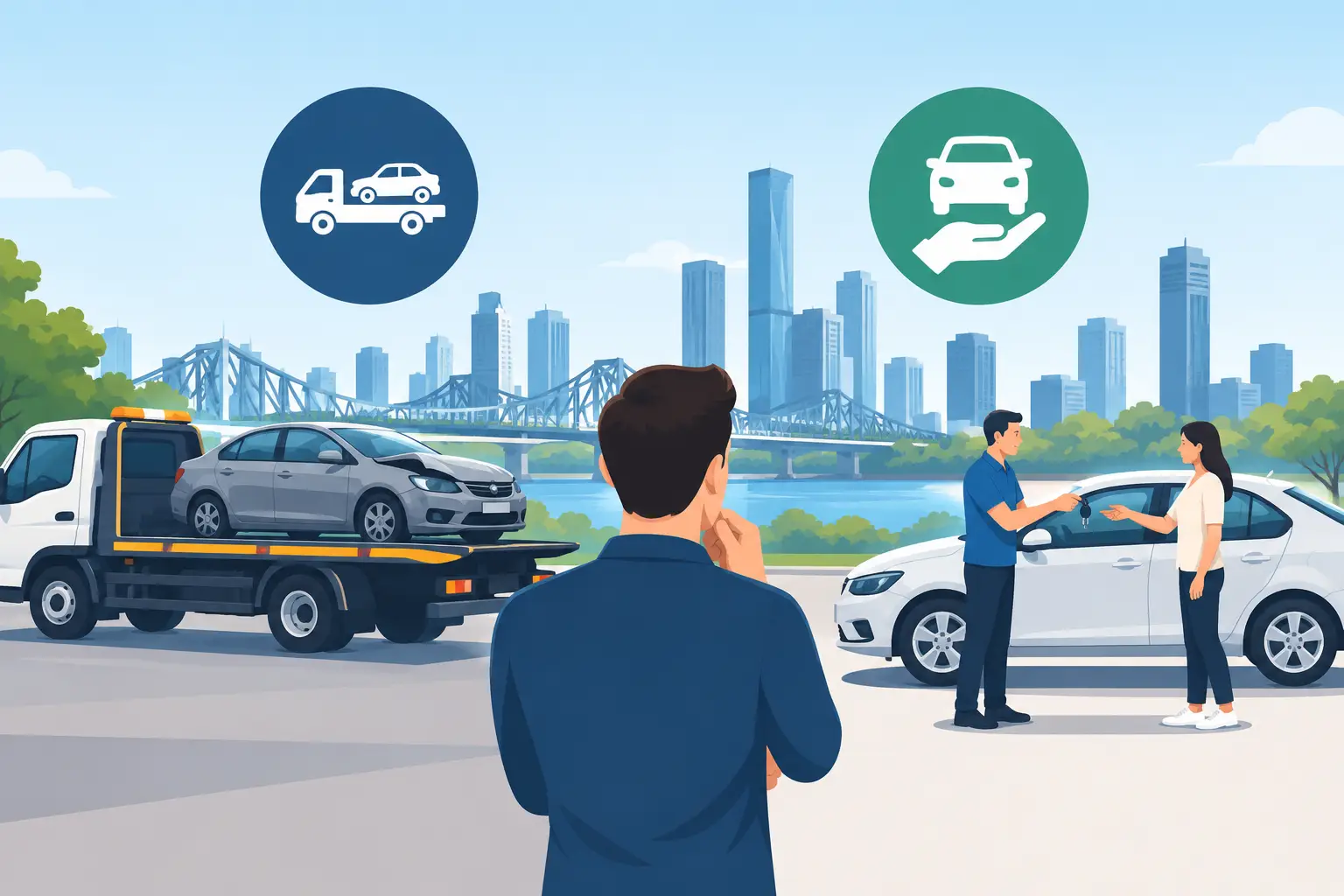
A dead car in the driveway can turn into an expensive problem fast. It takes up space, attracts complaints, and does not become easier to move with time. When weighing up towing versus selling, the real question is simple: will you pay to get rid of the vehicle, or can someone pay you and collect it for free?
For many Brisbane and South East Queensland owners, a standard tow makes sense only when the car is going somewhere useful, such as a mechanic or your new home. If the vehicle is unwanted, unregistered, accident-damaged or beyond economical repair, selling it to a car buyer who includes removal is usually the cleaner option.
Towing versus selling: what is the real difference?
Towing is a transport service. You arrange for a tow truck, pay a call-out fee and transport charge, then decide what happens to the vehicle at its destination. That destination might be a workshop, storage yard, auction site, wreckers or your own property. You still carry the cost and the next step.
Selling an unwanted vehicle to a car removal business is different. The buyer assesses the vehicle, makes an offer, pays you if you accept it, and arranges collection. There is no need to find a tow truck separately or pay someone to move a vehicle you no longer want.
That difference matters most when the car will not start, cannot legally be driven, has serious damage or has been sitting unused for months. Paying for a tow in those situations can feel like throwing good money after a bad car.
When paying for a tow is the right call
A tow is not always a bad choice. If your vehicle is relatively new, mechanically sound apart from one repair, or worth significantly more once fixed, getting it to a trusted mechanic may be worthwhile. The same applies if you are moving interstate, relocating within Queensland, or transporting a project car you intend to keep.
Towing can also suit vehicles that have strong sentimental value or a clear restoration plan. A classic car in the shed, for example, may deserve careful transport to a specialist rather than a quick sale.
Before booking, get the full price. Ask whether the quote includes loading, distance travelled, after-hours collection, difficult access and any waiting time. A low call-out price can rise once the truck arrives, particularly if the car is blocked in, has flat tyres, is missing wheels or cannot be safely loaded.
If the tow will lead to a repair, request a realistic repair estimate first. Include parts, labour, registration, tyres, tyres, tyres? No. Include parts, labour, registration, tyres and any likely follow-up work. A vehicle with one obvious fault often has more than one issue once a mechanic starts inspecting it.
When selling with free removal makes more sense
Selling is often the better answer when the vehicle has reached the end of its useful life for you. That does not mean it has no value. Wreckers and vehicle buyers can value usable parts, metal, tyres, batteries, engines, gearboxes and recyclable materials, even when the car is not roadworthy.
This option is particularly practical for old cars that will not start, written-off vehicles, flood-damaged cars, hail-damaged vehicles and unregistered utes. It also removes a common headache for small businesses with an old van or bus taking up valuable yard space.
With a proper car removal service, collection should be 100% free. You should know the offered amount before pickup, receive payment at collection, and avoid surprise towing charges. The process is designed to finish the job in one visit: quote, paperwork, payment and removal.
Top Cash Car Buyers purchases unwanted vehicles across Brisbane and surrounding South East Queensland areas, including cars, trucks, vans, buses and utes in almost any condition. If it is parked at home, a workplace, a workshop or on a property with reasonable access, it may be ready for collection rather than another costly tow.
Compare the total cost, not just the first quote
The cheapest-looking option is not always the best value. A tow quote may look manageable until you add the repair bill, storage fees, advertising costs or the time spent trying to sell privately. A private sale can deliver more money for a clean, registered, desirable vehicle, but it also takes work.
You may need to wash the car, take photos, write an ad, answer messages, arrange inspections and deal with people who fail to show up. If it is damaged or non-running, buyers may negotiate hard after arriving or expect you to organise transport.
A direct sale with free removal usually delivers a lower figure than a successful private sale of a roadworthy car. That is the trade-off. In return, you avoid the waiting, towing arrangements and uncertainty. For many owners, especially when the car is a burden rather than an asset, that certainty has real value.
Ask yourself three practical questions. Is the vehicle worth repairing? Can you safely and legally drive it? And would the likely sale price after repairs actually cover what you spend? Honest answers usually make the decision clearer.
What affects the amount you may be offered?
A buyer cannot value every unwanted vehicle the same way. Make, model, age, condition, damage, demand for parts and current scrap metal values all affect the offer. A popular ute with a damaged engine may still have valuable panels and components. An old sedan with rust and major collision damage may be valued mainly for recycling.
Be upfront about the vehicle from the start. Mention whether it starts, whether it is registered, what damage it has, whether keys are available and where it is located. Send clear photos if requested. Accurate information helps you receive a fairer quote and prevents delays on collection day.
Do not assume an unregistered or written-off vehicle is worthless. It may not suit a private buyer, but recoverable parts and materials can still make it valuable to the right buyer.
Avoid the common traps before your vehicle leaves
Whether you choose towing or selling, do not hand over the vehicle without checking the details. Confirm the agreed price, whether removal is free and when payment will be made. If someone changes the offer on arrival without a genuine reason, you can walk away.
Have proof that you own the vehicle available, along with photo identification if requested. Remove personal items from the glove box, centre console, boot, door pockets and under the seats. Check for toll tags, parking permits, garage remotes, work equipment and paperwork containing personal details.
For a registered vehicle, make sure you understand your Queensland transfer or cancellation obligations. Do not leave the registration status unclear after the car has gone. Keep a record of the sale, buyer details and collection date for your own protection.
Access is worth thinking about too. Tell the buyer if the car is in a narrow driveway, underground car park, behind another vehicle or on a property with a steep slope. A reliable removal team can plan for difficult pickups, but they need an honest picture before arriving.
A faster way to clear an unwanted vehicle
If your car still has a future after repair, towing it to a mechanic may be money well spent. If the repairs are not worth it and the vehicle is only taking up room, selling it with free pickup is often the more sensible move.
Get a clear quote, confirm there are no hidden surprises, and choose the option that leaves you with less expense and less stress. An unwanted car does not need to sit there for another season when it can be collected, paid for and out of your way.