
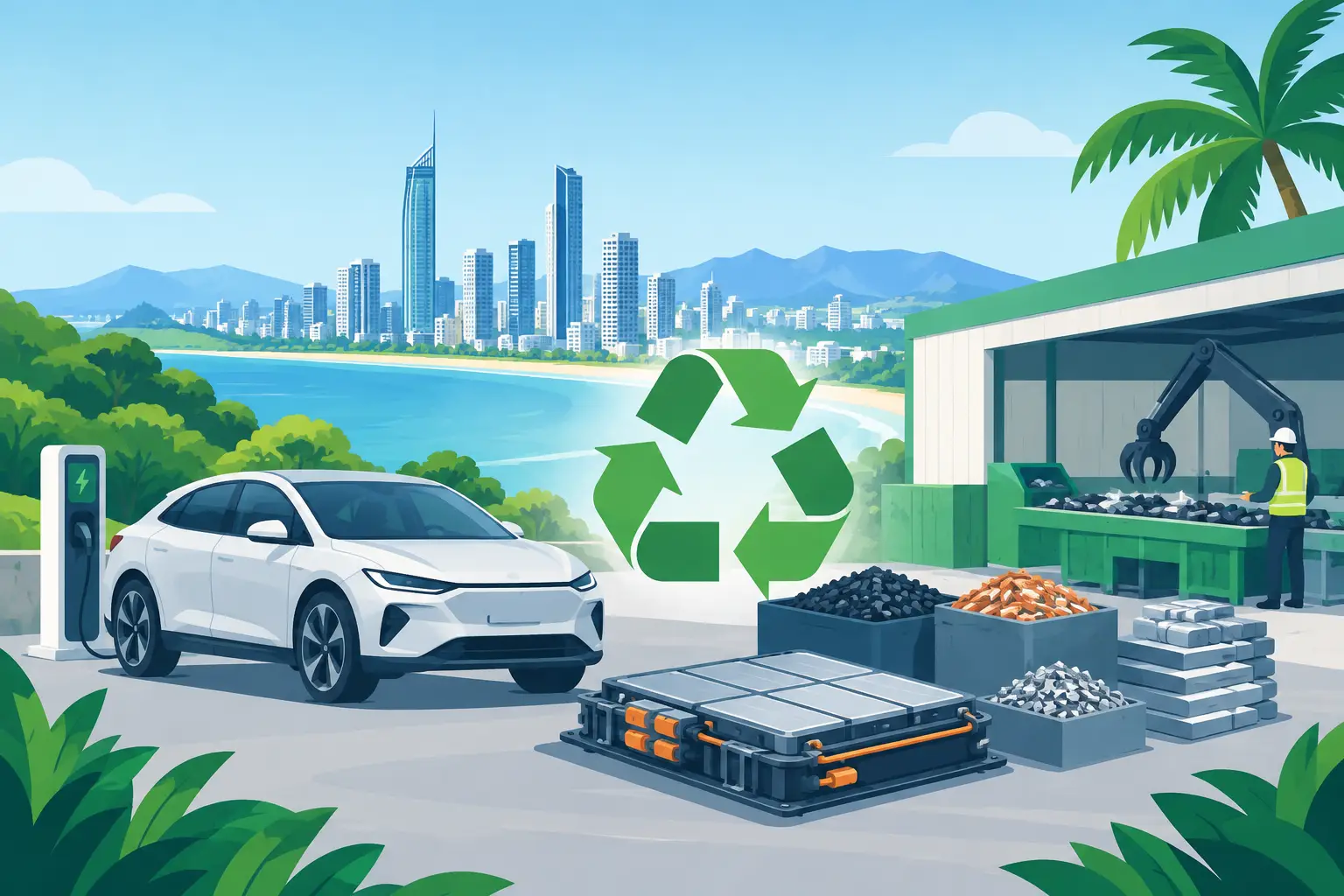
A damaged EV is not just another old car with a flat battery. It may still contain high-voltage equipment, valuable metals and reusable parts that need the right handling. That is why electric vehicle recycling trends matter to Queensland owners who are deciding what to do with an unwanted electric or hybrid vehicle.
For most people, the immediate concern is simple: the car is written off, not running, too expensive to repair or taking up space in the driveway. You want it gone without towing hassles, unsafe DIY work or weeks of waiting for a private buyer. The recycling process happens after collection, but choosing a buyer or removal service that understands the vehicle type is the first step.
Why EV recycling is different from ordinary car wrecking
A petrol or diesel vehicle is usually dismantled by removing fluids, recovering usable parts, separating metals and processing the remaining shell. An EV follows a similar path in some respects, but its battery system changes the job completely.
Lithium-ion battery packs are heavy, tightly sealed and connected to high-voltage cables. If a pack has been crushed, flooded, overheated or damaged in a collision, it can present a fire and safety risk. It should never be cut open, dismantled or stored carelessly in a shed or backyard.
That does not mean every damaged EV battery is rubbish. Battery condition varies widely. A vehicle may be uneconomical to repair while its battery modules, electric motor, inverter, wheels, interior parts or body panels still have value. Proper assessment determines whether components can be reused, remanufactured or sent for material recovery.
Hybrid vehicles need the same care. They generally have smaller battery packs than fully electric cars, but they still contain high-voltage systems that require trained handling.
Electric vehicle recycling trends changing the industry
The biggest shift is that end-of-life EVs are increasingly being treated as a source of recoverable materials, not simply as scrap metal. As more electric and hybrid vehicles enter the Australian used-car market, more will eventually reach the point of accident damage, mechanical failure or retirement.
Battery testing comes before recycling
One major trend is better battery assessment. Rather than assuming a used battery must be destroyed, specialist operators can test its state of health, check for physical damage and determine whether it has a safe next use.
A battery with enough capacity remaining may be suitable for refurbishment or a second-life stationary application, depending on its design, condition and applicable safety requirements. A badly damaged, swollen, water-affected or unstable pack is a different matter. In that case, safe transport and controlled recycling are the priority.
For an owner, the takeaway is straightforward: do not judge the value of an EV solely by whether it still drives. A written-off vehicle can contain components worth recovering, while a running vehicle with battery faults may need a more careful valuation.
More focus on recovering critical materials
EV batteries contain materials such as lithium, nickel, cobalt, manganese, copper, aluminium and graphite. The exact mix depends on the battery chemistry and vehicle model. These materials are valuable, and recovering them reduces the need to rely entirely on newly mined inputs.
Battery recycling methods are improving, with more attention on separating and recovering useful materials from cells and modules. The process is specialised. It is not the same as crushing an old car body for steel, and it is one reason responsible EV recycling involves a chain of qualified handlers rather than one quick dismantling job.
Reuse of parts is growing
Not every recyclable item is inside the battery. EVs have doors, bumpers, mirrors, headlights, suspension components, wheels, screens, seats and many other parts that may be reusable if they are in good condition.
The growing EV repair market is increasing demand for tested used components. Recovered parts can help owners and repairers source alternatives for older or accident-damaged vehicles. It depends on the part, its condition and whether it can be checked and sold safely, but reuse is often the best outcome before recycling the raw material.
Vehicle makers are designing with recovery in mind
Another of the key electric vehicle recycling trends is greater attention to battery traceability, pack design and disassembly. Batteries are not all built the same way. Some are easier to access, diagnose and separate than others. Clearer information about battery chemistry, repair history and handling requirements can make a real difference when a vehicle reaches the end of its life.
This will not make EV recycling simple overnight. Battery packs remain complex, and safe removal takes time. But better design and better data can reduce waste and make future recovery more efficient.
Local capability matters more in Queensland
Queensland is a large state, and specialist battery processing is not available on every corner. Moving a damaged EV battery can involve careful packaging, storage and transport arrangements. That is particularly relevant after a serious crash, flood or thermal event.
As EV numbers grow across Brisbane, Ipswich, Logan, the Gold Coast and surrounding areas, local collection, assessment and logistics capability will matter more. The practical goal is not for every car yard to process battery chemicals. It is for vehicles to be identified correctly, collected safely and directed to suitable downstream recyclers or repair channels.
What happens when an unwanted EV is collected?
The process depends on the vehicle’s condition. A car that is simply old or non-running is handled differently from one with a compromised battery after a crash or flood. Still, a responsible end-of-life pathway generally follows the same order.
First, the vehicle is identified and assessed. This includes confirming whether it is fully electric, hybrid or plug-in hybrid, checking visible damage and noting whether the battery area has been affected. If there are signs of smoke, heat, leaking fluid, swelling or serious underbody damage, the vehicle should be treated as urgent and left alone until appropriate advice is available.
Next, usable parts may be removed by trained operators. The high-voltage system must be isolated correctly before work begins. Components that cannot be reused are separated into material streams such as steel, aluminium, copper, plastics, glass and electronics.
The battery pack may then be tested for reuse potential or sent through an approved recycling pathway. This stage is not instant, especially where a battery has been damaged. Safety comes before speed once the vehicle is in the recycling chain.
What owners should do before selling or removing an EV
You do not need to become an EV technician to dispose of a problem vehicle properly. You do need to provide clear information. Tell the buyer or removal provider the make, model, year, battery type if known, whether the vehicle starts and whether it has been in an accident, flood or fire.
Do not attempt to disconnect orange high-voltage cables, remove the battery pack or drain battery components yourself. Do not charge a vehicle that has suffered flood damage or a heavy impact just to see if it still works. If you notice heat, smoke, unusual smells, hissing, swelling or fluid around the battery area, move away from the vehicle and seek emergency assistance if there is an immediate danger.
Before handover, remove personal belongings, take your toll tag and clear your mobile pairing or connected-app access where possible. Keep your proof of ownership and any service records. Battery service history can help establish what the vehicle contains and what may still be recoverable.
A practical disposal choice for damaged EVs
Private selling can be difficult when an EV has major faults or accident damage. Buyers will ask questions about battery health, charging, safety and repair costs, and many will walk away if the answers are unclear. Towing can also become an extra expense if the car cannot be driven.
A vehicle removal service can be the simpler option when it accepts the vehicle type and can arrange appropriate collection. Top Cash Car Buyers purchases unwanted vehicles in a range of conditions, with free removal and on-the-spot payment for eligible vehicles. For electric and hybrid vehicles, always disclose the condition honestly so the right collection arrangements can be made.
The best outcome is not always the highest advertised figure. It is the option that removes the vehicle safely, handles the paperwork clearly and gives its reusable parts and materials a proper path instead of leaving a damaged car sitting in your driveway.