
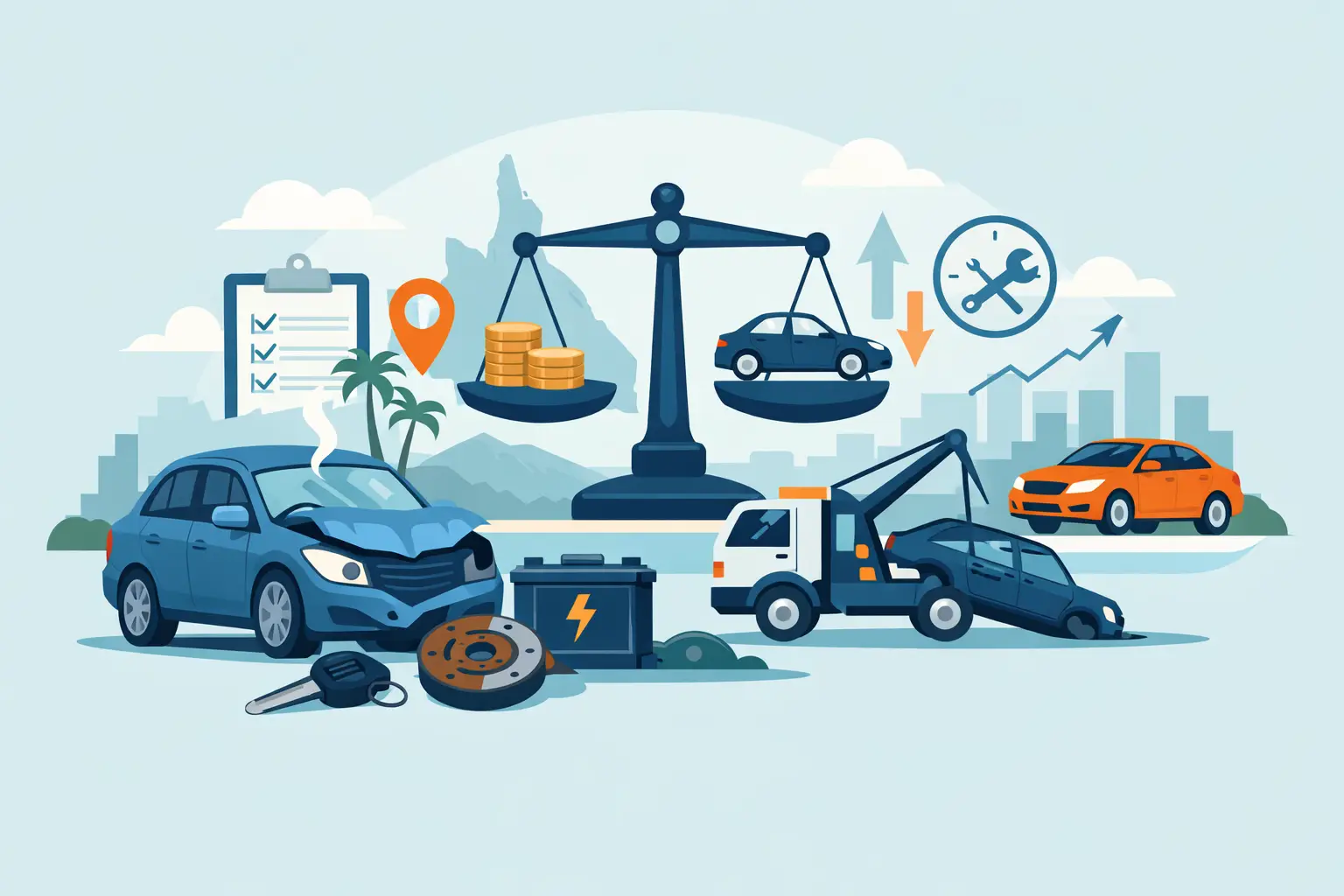
That old car sitting in the driveway might look like a write-off, but it still has value. If you’re wondering what affects scrap car price, the short answer is this – metal value matters, but it is not the only thing buyers look at. The final offer usually comes down to a mix of weight, parts, condition, demand, transport costs and how easy the vehicle is to process.
If you are in Brisbane or anywhere across South East Queensland, understanding those factors helps you sort the fair offers from the lowball ones. It also saves time when you want the car gone quickly and do not want surprises on pickup day.
What affects scrap car price most?
The biggest factor is usually the vehicle’s scrap metal value. Cars, vans, utes and 4WDs all contain steel, aluminium and other recyclable materials, so heavier vehicles often attract stronger offers than smaller hatchbacks. A large ute with more metal in it can be worth more than a compact car, even if both are completely dead.
That said, scrap value is only the starting point. A buyer also looks at whether the vehicle has reusable parts, what condition those parts are in, and how much work is involved in collecting and processing it. A complete car with its engine, gearbox, catalytic converter, wheels and battery still in place will usually be worth more than one that has already been stripped.
Weight and metal prices
When people ask what affects scrap car price, weight is one of the first things to mention because scrap yards and car buyers recover value from the metal. More weight often means more recyclable material, and more recyclable material can support a better quote.
But weight does not work in isolation. Scrap metal prices go up and down. If steel and non-ferrous metal prices are strong, offers tend to improve. If the market softens, the same vehicle may bring less than it would have a few months earlier. That is why two identical cars can receive different quotes at different times.
For sellers, the practical point is simple. If you have been putting off removal for months, waiting does not always improve the result. Sometimes the fastest sale is the better sale.
Make, model and parts demand
Not every scrap vehicle is bought only for its shell. Some are worth more because parts can be resold. Popular makes and models often hold better wrecking value because there is steady demand for usable components such as doors, mirrors, transmissions, alternators, radiators and interior parts.
This is where an older vehicle can surprise you. A non-running Toyota, Mazda or Ford with commonly needed parts may attract more interest than a rarer model that is harder to dismantle or has little parts demand. On the other hand, if the car has been heavily damaged in the front or rear, some of the best-value parts may no longer be usable.
Vehicles with sought-after diesel engines, commercial van parts or 4WD components can also stand out. Tradies and business owners often scrap work vehicles that are rough overall but still contain valuable assemblies.
Condition still matters, even for scrap
A lot of owners assume a scrap car is a scrap car. That is not quite right. Condition still affects the price, even if the vehicle is headed for wrecking or recycling.
A complete car is generally worth more than an incomplete one. Missing wheels, missing engine parts, a removed catalytic converter or stripped interior can reduce the offer because there is less left to recover. Fire damage can also drag value down because it affects wiring, plastics, metal quality and salvageable parts all at once.
Accident damage is a bit different. A damaged car can still be worth good money if the drivetrain, panels or other major parts remain usable. Flood damage can be more complicated. Some flooded vehicles still hold metal and parts value, but water contamination can limit what can be resold. Hail damage usually affects cosmetic value more than scrap value, so some hail-damaged vehicles still quote reasonably well.
Registration, paperwork and ownership
Registration status does not always make or break the deal, but it can influence value and how smoothly the sale goes. An unregistered car can still be sold for scrap, but the buyer needs clear proof of ownership. If the paperwork is missing or the vehicle details do not line up, that can slow the process down.
For straightforward sellers, the best offers usually come when the owner can provide ID and basic vehicle details without any confusion. It reduces risk for the buyer and helps avoid delays. If a company has to spend extra time sorting paperwork issues, that can affect how attractive the job is.
Location and towing costs
This is one factor many sellers overlook. Your location affects the scrap car price because pickup is part of the cost. A vehicle sitting in suburban Brisbane with easy access is cheaper to collect than one stranded on rural property, stuck in a tight basement or parked on soft ground where loading is difficult.
Distance matters, but so does access. If a tow truck can back up, load the car quickly and leave, the job is simple. If the vehicle has no wheels, locked steering or a blocked driveway, recovery becomes slower and more expensive. Those costs can eat into the offer.
That is why free towing is not a small detail. It changes the real value of the deal. A quote that sounds higher at first can end up worse if removal fees appear later.
Catalytic converter, battery and other high-value items
Some parts carry more value than others. The catalytic converter is a big one because it contains precious metals. If it is still fitted, it can improve the quote. If it has already been removed, the buyer loses one of the more valuable salvage items.
Batteries, alloy wheels and some electronic modules can also influence price. In diesel vehicles, fuel system components and turbo parts may add value if they are still present and usable. This is another reason complete vehicles generally receive stronger offers than stripped shells.
Of course, not every part gets counted the same way. A newer battery in a completely dead car does not magically make it worth thousands. It helps, but the buyer still looks at the whole vehicle and the total recovery value.
Vehicle age and demand in the local market
Age matters, but not always in the obvious way. A very old car may be worth less if parts demand has dried up and corrosion is severe. At the same time, a slightly older model with a strong following can hold useful wrecking value.
Local demand also plays a role. In South East Queensland, common passenger cars, utes, 4WDs and vans often move through wrecking channels faster because there is a steady market for second-hand parts and recyclable material. A less common import may be harder to place, which can affect the quote.
Why quotes can vary between buyers
If you get three quotes for the same vehicle, they may not match. That does not always mean someone is being dishonest. Different buyers run different models. One may focus on metal recovery, another on parts resale, and another on volume collection with tighter margins.
Overheads matter too. Towing capacity, yard costs, labour, current stock levels and even how many similar cars a buyer already has can all influence the price. If a yard is overloaded with one make or model, it may not pay top dollar for another one that week.
This is why clear, upfront details get you closer to an accurate offer. Give the make, model, year, condition, damage type, whether it starts, whether key parts are missing and where the vehicle is located. The more accurate the information, the less chance of a reduced offer at pickup.
How to get the best scrap car price
If your goal is a fair price without wasting half the week, honesty works in your favour. Describe the vehicle properly, mention major damage, say if it is unregistered, and let the buyer know if access is tricky. Inflating the condition rarely helps because the car still has to be inspected and loaded.
It also pays to remove personal belongings, have your ID ready, and make sure you can prove ownership. If the car is complete, leave it complete. Pulling parts off before sale often lowers the overall offer more than owners expect.
Most importantly, look at the full deal, not just the headline number. Fast pickup, free towing, simple paperwork and payment on the spot all have real value. A slightly higher quote loses its shine quickly if you end up paying for removal or dealing with last-minute changes. That is why many Queensland owners choose a straightforward buyer such as Top Cash Car Buyers when they want the car gone without mucking around.
The best result usually comes from matching the right buyer to the right vehicle at the right time. If your car is old, damaged or no longer worth repairing, a fair scrap price is really about one thing – how much value is still left in it, and how quickly that value can be turned into cash for you.
4 Responses