
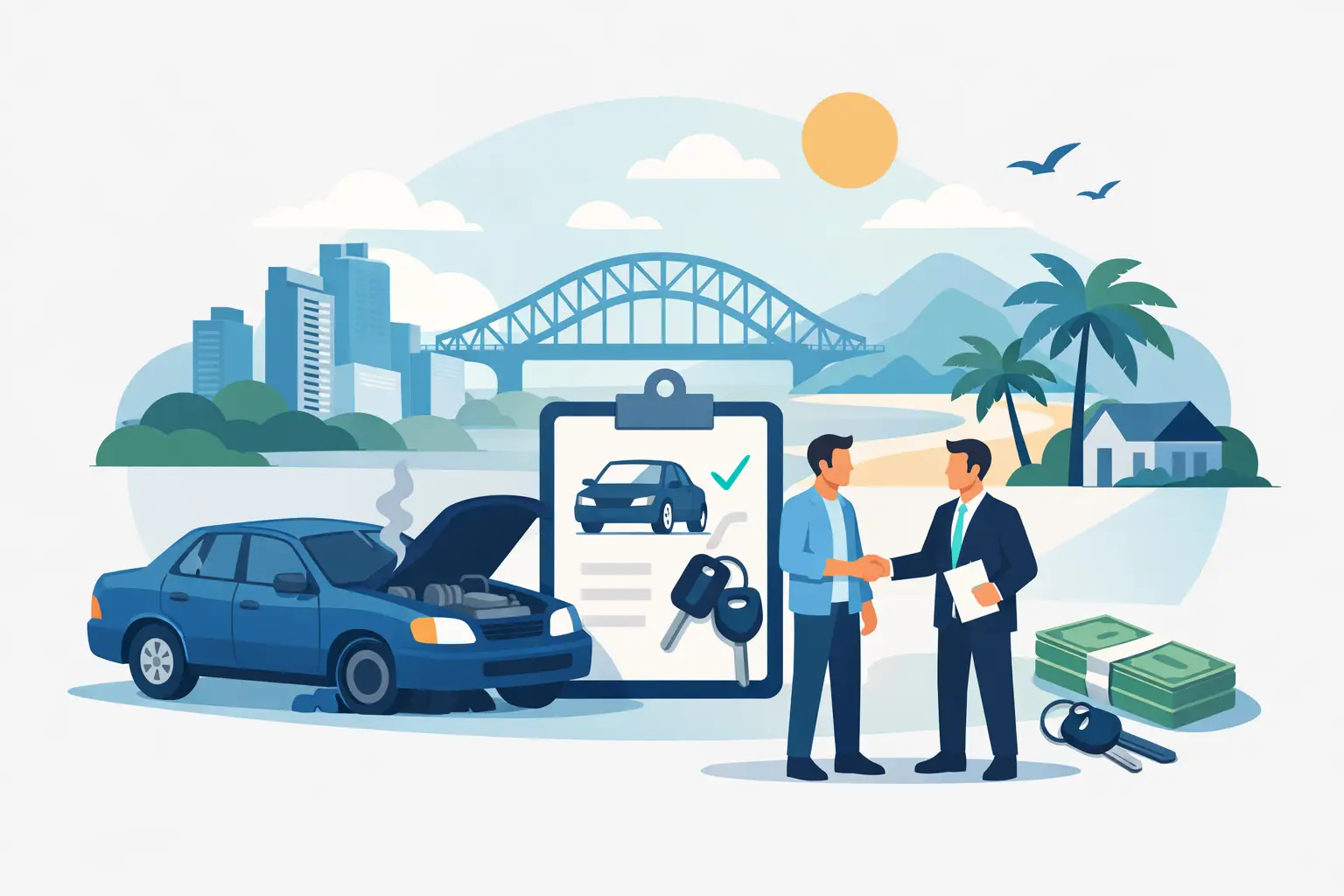
A car that will not start has a way of becoming everyone’s problem. It sits in the driveway, takes up space in the shed, and keeps slipping down the to-do list because getting it repaired feels like throwing good money after bad. If you’re asking, can I sell a non runner, the short answer is yes – and in many cases it is a lot easier than trying to fix it first.
In Queensland, non-running vehicles are sold every day. Some have dead engines. Some have gearbox trouble. Others have been parked for months after an accident, flood damage, electrical faults or failed rego. The key point is simple: a car does not need to be drivable to have value. It can still be bought for wrecking, recycling, salvageable parts or scrap metal.
Can I sell a non runner without repairing it first?
Yes. You do not need to get the car back on the road before selling it. That is the biggest mistake many owners make. They assume a buyer will only want a vehicle that starts, drives and passes a roadworthy inspection. That might be true in a private sale, but it is not how cash car buyers and car removal services work.
A non runner can still be worth buying because different parts of the vehicle may still have value. The engine might be gone, but the panels, wheels, gearbox, catalytic converter, interior, battery, radiator or electronics may still be reusable. Even if the vehicle is beyond repair, the shell and metal still carry scrap value.
This is why selling as-is often makes more sense than spending money on towing, diagnostics and repairs with no guarantee you will get that money back.
What counts as a non runner?
A non runner is any vehicle that cannot be driven safely or legally under its own power. That can include cars, utes, vans, buses and trucks. Sometimes the issue is mechanical. Sometimes it is accident-related. Sometimes the vehicle has simply been sitting too long.
Common examples include a blown motor, seized engine, failed transmission, major electrical fault, flat battery that will not hold charge, crash damage, missing parts, flood damage or long-term neglect. An unregistered vehicle can also fall into this category if it cannot be moved on public roads.
The label matters less than the condition. Buyers usually want to know what is wrong with it, where it is located, whether it rolls, and whether you have proof of ownership.
What affects the price of a non-running car?
If you want a fair answer to can I sell a non runner, you also need a fair answer to what it is worth. There is no single price because it depends on the vehicle and the problem.
Age, make, model and overall demand all play a part. A late-model ute with engine damage may still bring a stronger offer than an old hatchback with multiple faults because its parts are worth more. The body condition matters too. Straight panels, good glass and usable interiors help. So do complete vehicles with all major components still fitted.
Damage type also changes the price. A car with a dead starter motor is very different from one that has been under flood water. A repairable write-off may still attract interest, while a burnt vehicle may be worth little more than scrap. If the tyres hold air and the vehicle can be winched or rolled onto a truck easily, removal is usually simpler. That can help keep the process fast.
Paperwork matters as well. If you have photo ID and can prove the car is yours, the sale is smoother. Missing paperwork does not always stop a sale, but it can slow things down.
Private sale or car removal service?
You can try to sell a non runner privately, but this is where many owners lose time. Private buyers often want a bargain, then they still expect answers you may not have. They ask whether the fault is minor, whether it will start with a jump, whether you can drop the price, and whether they can come back next week with a trailer. That turns into messages, no-shows and drawn-out negotiations.
A car removal buyer is usually the better option if speed matters. The process is designed for vehicles in poor condition. You provide the details, get a quote, book a pickup time, and the vehicle is collected. There is no need to advertise, no strangers at your home, and no need to organise your own towing.
That is the biggest practical difference. A private sale might get you more in some cases, but only if the right buyer turns up and only if the vehicle still has enough appeal. For many owners, the convenience of same-day pickup and instant payment outweighs the chance of squeezing out a few extra dollars.
Can I sell a non runner if it is unregistered?
Yes, in most cases you can. An unregistered non runner is very common. In fact, plenty of unwanted vehicles have lost rego because they have been parked for too long, failed inspection, or become too costly to justify renewing.
The main issue is not the lack of registration itself. It is whether you can show ownership and whether the vehicle can be collected safely. If it cannot be driven, it will usually need towing or truck pickup. A proper removal service handles that for you, which saves another job and another bill.
If you still have number plates attached, you may need to remove them before handover depending on your situation and what you plan to do with your rego. That part is worth checking before pickup so there are no delays.
What do you need to sell a non runner?
Most of the time, the process is straightforward. You will usually need your name, contact details, the vehicle make and model, location, and a clear description of the condition. If you know what has gone wrong, say so. If you do not know, be honest about that too.
You should also have proof that the vehicle belongs to you. That could include registration papers, an old notice, purchase records or identification that matches the vehicle details. Buyers are not expecting a drama-free showroom car. They are expecting clear, honest information and a legal sale.
Photos can help if you want a faster quote. A few shots of the front, rear, sides and any obvious damage make it easier to assess the vehicle properly. That reduces the chance of surprises on the day.
Why many owners sell sooner rather than later
The longer a non runner sits, the less convenient it becomes. Tyres go flat. Parts disappear. Rust spreads. Leaks stain the driveway. Neighbours start asking questions. If the car is stored at a rental, on a worksite or at a family member’s place, it can become a burden quickly.
There is also the money side. Every week you delay is another week the vehicle is doing nothing for you. If you already know you will not repair it, holding onto it rarely improves the outcome. Selling now clears the space and puts cash in your hand without the ongoing hassle.
This is especially true for damaged commercial vehicles. A dead ute or van can tie up room and create a practical headache for tradies and small businesses. Fast removal gets it out of the way so you can get on with more important jobs.
How the sale usually works
A proper non-runner sale should feel simple. You request a quote with the basic vehicle details. The buyer confirms the condition, location and pickup time. Then the truck arrives, the paperwork is handled, and payment is made on the spot.
That is why many Queensland owners use services built around unwanted vehicles rather than trying to manage the sale themselves. With a business like Top Cash Car Buyers, the focus is speed and no-fuss removal – instant quotes, free towing, and quick pickup across Brisbane and surrounding areas. For a non runner, that is usually what matters most.
The only real trade-off is that the offer reflects the vehicle’s actual condition and resale potential, not what it might be worth if fully repaired. But that is often the honest number owners need, especially when repair costs are already out of control.
When selling a non runner makes the most sense
If the repair bill is more than the car is worth, selling makes sense. If the vehicle has major engine or transmission failure, selling makes sense. If it is unregistered, damaged, stranded, flood-affected or simply taking up room, selling often makes sense then too.
Where owners get stuck is hoping the car has one more good year left in it. Sometimes it does. Often it does not. Once the vehicle stops being practical, the best move is usually the simple one.
If you have been looking at that dead car in the driveway and wondering what to do next, the answer is not complicated. Yes, you can sell a non runner – and the sooner you deal with it, the sooner it stops being your problem.
One Response