
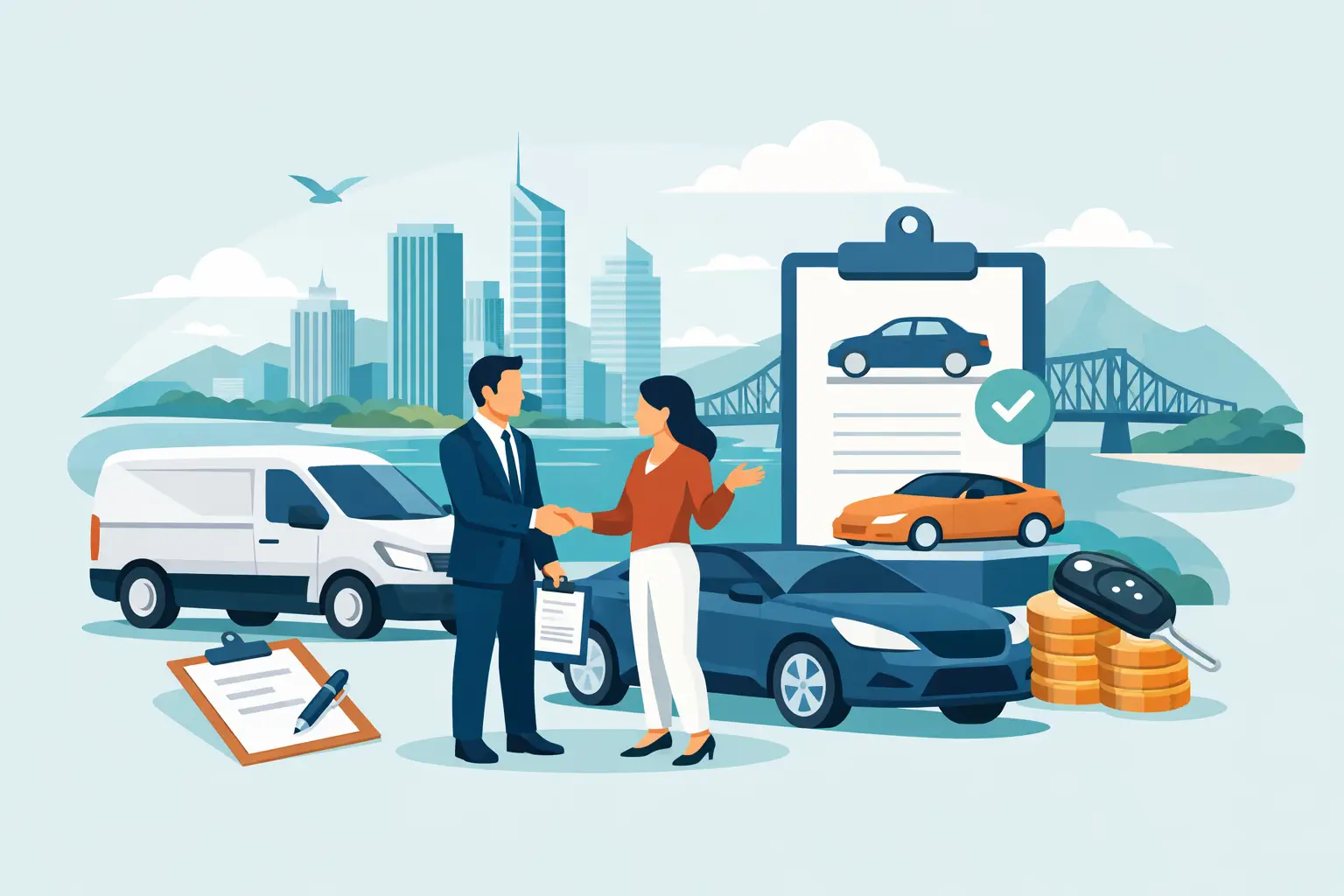
A work ute that has been sitting behind the shed for six months is not helping the business. Neither is an old delivery van with a failed gearbox, a written-off car taking up a staff bay, or a surplus fleet vehicle costing money in registration and insurance. So, can businesses sell company vehicles? Yes. In Queensland, a business can sell a vehicle it owns, provided the right person approves the sale and the transfer, finance and tax details are handled properly.
For many small businesses, the best option is not advertising the vehicle, arranging inspections and waiting for private buyers to turn up. It is getting a clear offer, completing the paperwork and having the vehicle collected. That can be especially useful when the vehicle is damaged, unregistered, non-running or simply not worth repairing.
Can businesses sell company vehicles legally?
Yes. A company, sole trader, partnership or trust can sell a vehicle that is recorded as a business asset. The key issue is ownership. The seller needs the authority to dispose of it, and the buyer needs to know exactly who they are dealing with.
If the vehicle is registered in a company name, a director or another authorised representative should approve and sign the sale documents. A sole trader may sell a vehicle held in their business name, while partnerships and trusts should make sure the person signing has the necessary authority under their business arrangements.
This sounds straightforward because it usually is. Problems arise when a staff member sells a work vehicle without permission, when the rego is in a different name from the business selling it, or when there is money still owing on finance. Sort those details out before agreeing to a sale price.
Check who owns the vehicle before it goes
Start with the registration certificate, vehicle records and purchase documents. Confirm the legal owner, the vehicle identification number, registration number and make and model all match. If the vehicle was purchased through a finance arrangement, check whether the lender still has a security interest over it.
A financed vehicle can still be sold, but the debt or security interest needs to be cleared as part of the transaction. Do not hand over the vehicle and assume the finance will sort itself out later. Speak with the lender first and get clear written instructions about the payout amount and release process.
It is also worth checking whether the vehicle is a lease vehicle rather than an owned asset. A business generally cannot sell a leased van, truck or ute without the leasing company’s approval. The same caution applies to vehicles used as collateral for a business loan.
The paperwork a business should prepare
A clean sale is faster for everyone. Before arranging collection, have the basics ready: proof of ownership, the business details, photo identification for the authorised seller and any registration papers you hold. If there is a company involved, the buyer may also ask for confirmation that the person selling has authority to act for it.
Keep a proper record of the sale. At a minimum, it should show the date, vehicle details, agreed price, buyer and seller details, and whether GST applies. An invoice or receipt gives the business an audit trail and gives the buyer proof of purchase.
For a registered vehicle in Queensland, the registration transfer process needs to be completed through the relevant transport authority. In many private sales, a current safety certificate is required before a registered vehicle is offered for sale, although there are exceptions and different rules for certain vehicle types and circumstances. If the vehicle is unregistered, damaged or being sold for wrecking, the process can be different. Check the current Queensland requirements for your specific vehicle before listing it as registered and roadworthy.
Do not leave the rego transfer open-ended. Until the records are updated, fines, toll notices and other headaches can still find their way back to the previous registered operator.
When the vehicle is unregistered or written off
An unregistered vehicle can still be sold. So can a repairable write-off, a flood-damaged car, a hail-damaged ute or a truck that will not start. The buyer simply needs an accurate description of its condition and the right paperwork for the sale.
Be upfront about major faults, accident damage, missing parts and whether keys are available. A business does not need to spend thousands repairing an old fleet vehicle just to move it on, but it should not misrepresent what it is selling either. Honest details lead to a fairer quote and avoid disputes at collection.
If plates are still attached to an unregistered vehicle, deal with them correctly rather than sending them away with the car by default. Depending on the circumstances, they may need to be surrendered or managed through the registration process.
Tax and accounting: do not treat the payment as loose cash
Selling a company vehicle has accounting consequences. The vehicle may have been depreciated, claimed as an asset, or included in previous GST reporting. The sale proceeds need to be recorded in the business accounts, even if the vehicle is old and the amount received is modest.
Whether GST applies depends on the business’s GST registration and the nature of the sale. If your business is registered for GST and the sale is taxable, the amount should be handled correctly on the invoice and in your BAS records. There may also be a profit or loss on disposal once the vehicle’s written-down value is considered.
This is not a reason to delay a sale. It is a reason to give your bookkeeper or accountant the sale receipt and vehicle records after the transaction. They can make the correct adjustment without turning a simple vehicle disposal into a bigger job later.
Private sale versus a direct vehicle buyer
A private sale can bring a higher price for a late-model, registered vehicle in good condition. But it also means cleaning it, photographing it, posting ads, answering messages, arranging inspections and negotiating with people who may never show up. For a business owner or tradie, that time has a cost.
A direct buyer is often the practical choice when speed matters or the vehicle has problems. This is particularly true for old work vans, accident-damaged cars, surplus utes, non-runners and vehicles with expired rego. You may not get the same figure as a retail-ready private sale, but you avoid advertising costs, tyre-kickers, towing bills and weeks of inconvenience.
Before accepting an offer, ask what is included. A straightforward service should confirm the price, collection time, towing cost and payment method before the vehicle is loaded. There should be no surprise charge because the battery is flat, the engine will not run or the vehicle is parked at a workshop, provided those details were disclosed upfront.
A simple way to sell an unwanted business vehicle
For a business vehicle that is ready to go, the process should be short. Provide the make, model, year, condition, location and registration status. Include clear details about damage or mechanical faults. That allows the buyer to make a more accurate offer from the start.
Once the price is agreed, confirm that the person meeting the buyer has authority to sell and has the required documents. Arrange a collection time that does not disrupt your workday, complete the receipt and registration steps that apply, then release the vehicle only after payment is confirmed.
Top Cash Car Buyers can collect unwanted company cars, vans, utes, trucks and buses across South East Queensland, including vehicles that are damaged, unregistered or no longer running. The collection is 100% free, and the aim is simple: agree on a fair price, pay on the spot and remove the vehicle without adding another job to your week.
Do not let an idle vehicle keep costing the business
An unused vehicle still takes up space, attracts insurance and registration costs, and can become harder to sell as its condition declines. If it is no longer earning its keep, get the ownership and finance details in order, keep the sale record for your accounts and choose a buyer who can collect it promptly. That turns a parked problem into cleared space and cash back in the business.
One Response