
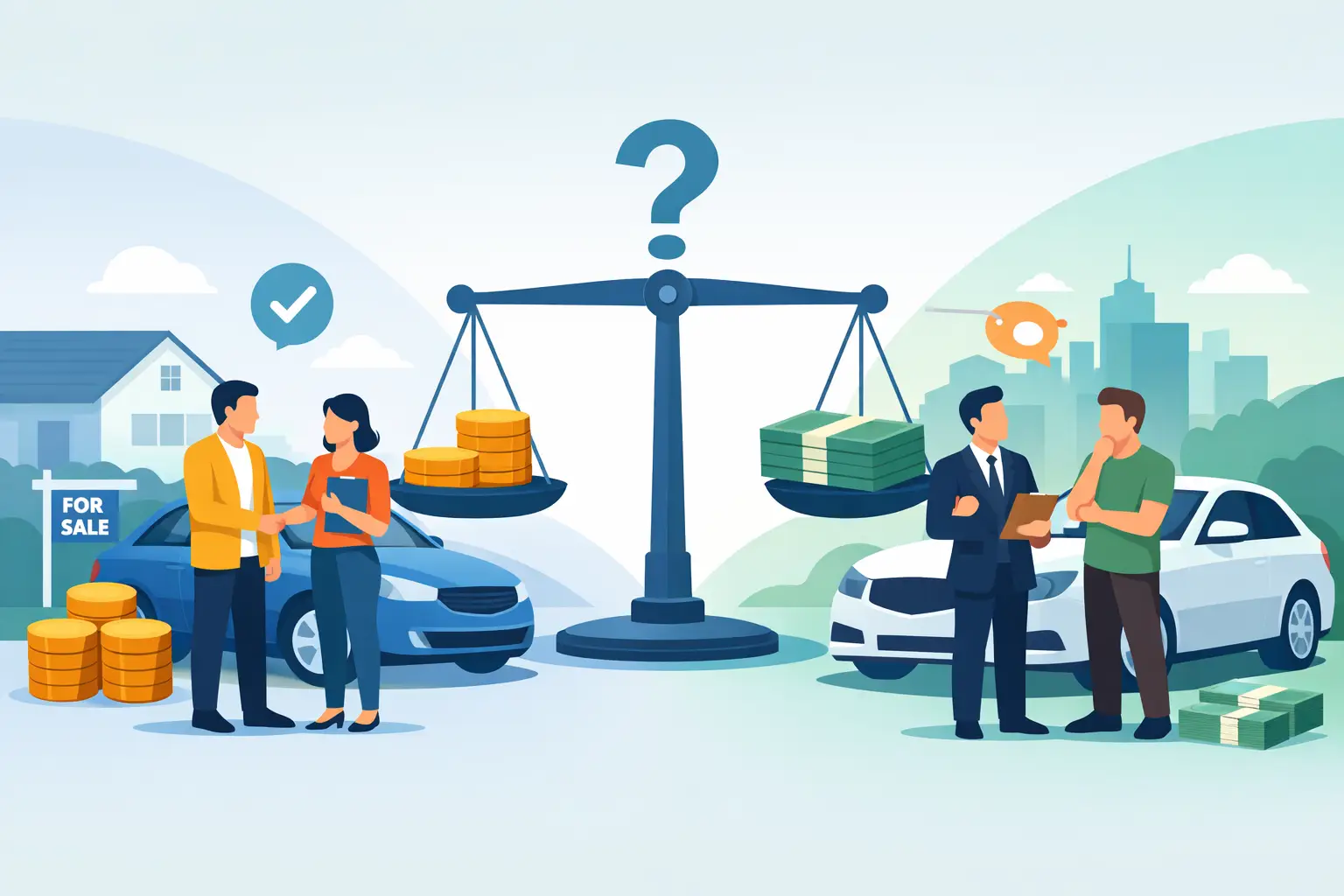
Most people start the private sale vs car buyer question with one thing in mind – which option puts more money in their pocket. Fair enough. But the better question is what you actually get after the time, stress, repairs, tyre-kickers, no-shows, towing costs and paperwork are all counted.
If your car is clean, roadworthy and in demand, a private sale can sometimes bring a higher asking price. If your vehicle is old, damaged, unregistered, not running, written off or simply not worth the hassle, selling to a car buyer is often the faster and smarter result. The right choice depends on the condition of the vehicle, how quickly you need it gone, and how much effort you want to put in.
Private sale vs car buyer: the real difference
On paper, private selling looks simple. You advertise the car, answer calls, meet buyers, negotiate, and hand it over when someone pays the amount you want. In reality, it can drag on for days or weeks, and sometimes much longer if the market is slow or the car has issues.
A car buyer works differently. You request a quote, accept the offer if it suits you, arrange pickup, complete the paperwork, and get paid. For many sellers across Brisbane and South East Queensland, that is the difference that matters most. It is not just about the final dollar figure. It is about how many problems come attached to that figure.
When a private sale can make sense
There are cases where selling privately is worth considering. If your vehicle is relatively new, well presented, registered, mechanically sound and easy to sell, private buyers may be willing to pay more than a trade or direct buyer. That is especially true for popular models with low kilometres and full service history.
Private sale can also suit sellers who are not under pressure. If you have time to clean the car properly, take decent photos, create ads, field messages, and meet strangers for inspections, you may be able to hold out for a stronger price. Some owners enjoy the process. Most do not, but if you are patient and your car is desirable, there can be upside.
That said, even a good vehicle comes with effort. Buyers want to negotiate. They often compare your car against dozens of others. They may ask for mechanical checks, test drives, registration details and proof of history. If the car needs even minor work, they will use it to push the price down.
When a car buyer is the better option
This is where the private sale vs car buyer decision gets a lot clearer. If the vehicle is damaged, unregistered, not drivable, old, unwanted or costly to repair, private buyers usually disappear fast. The few who do enquire often expect a bargain and plenty of your time.
A direct car buyer is usually the better fit when you need a practical outcome, not a drawn-out sales campaign. That includes cars with engine trouble, accident damage, flood damage, hail damage, missing plates, expired rego, body rust or major mechanical faults. It also includes vehicles that have been sitting in the driveway for months and are now taking up space.
For these vehicles, the private market gets very thin. Most everyday buyers want something they can drive away straight after payment. They do not want to organise towing, repairs, roadworthy work or registration headaches. A car buyer does.
The hidden costs of selling privately
A private sale can look more profitable until the extra costs start adding up. You may need to pay for cleaning, detailing, minor repairs, replacement parts, a battery, tyres or windscreen work just to make the car presentable. If the vehicle is unregistered or unsafe, your pool of buyers shrinks even further.
Then there is your time. Calls at odd hours, messages that go nowhere, people asking if the price is “firm” before they even inspect the car, and test drives that lead to lowball offers. If the car does not start or cannot be driven legally, you may also need to think about transport. That cost often lands on you.
There is also the simple fact that many owners overestimate what their vehicle is worth. They compare it with similar ads online, but listed price is not sold price. Plenty of cars sit for weeks because the asking figure is unrealistic.
What you give up with a car buyer
To be fair, selling to a car buyer is not always the highest possible price in every situation. If your car is in strong condition and easy to sell, a private buyer may pay more because they are buying it to use, not to resell, dismantle or recycle.
A car buyer prices the vehicle based on condition, demand, salvage value, parts value, metal value and collection costs. That means the offer reflects a real-world, fast-sale figure. You are trading the chance of squeezing out extra money for speed, certainty and convenience.
For many people, that is a good trade. Especially when the alternative is keeping a useless car on the property while registration lapses, tyres go flat and the vehicle loses even more value.
Risk matters more than most sellers expect
This part often gets ignored. Private sales involve strangers coming to your home or meeting you elsewhere, test driving your vehicle and handling payment directly. Most transactions are fine, but there is more room for delays, pressure tactics and arguments after the sale.
A professional car buyer keeps the process cleaner. The price is agreed, pickup is booked, the paperwork is handled, and payment is made on the spot. There is less uncertainty and less back-and-forth. If your priority is to get the vehicle gone without hidden surprises, that matters.
For damaged or scrap vehicles, risk increases again in a private sale because buyers may arrive and suddenly claim the car is worth much less than discussed. They know you have already made time for the meeting and may be more likely to give in. That is a common frustration.
Private sale vs car buyer for damaged cars
If the car has accident damage, mechanical issues or no registration, private sale becomes much harder. You are not just selling a vehicle at that point. You are asking a private buyer to take on a problem. That narrows the market and invites hard bargaining.
A car buyer is built for exactly that kind of vehicle. The condition does not need to be perfect. In many cases, it does not even need to be drivable. That changes the whole process. You do not need to spend money trying to make a bad car look slightly better, and you do not need to explain every issue to ten different people who never show up.
This is why many Queensland owners choose services like Top Cash Car Buyers for vehicles that are no longer worth the private-sale effort. If the car is effectively at the end of its life, speed and simplicity usually beat chasing a top-dollar figure that may never arrive.
How to decide which option suits you
Start with the condition of the car. If it is tidy, registered and likely to attract strong interest, a private sale may be worth trying if you have the time. If it has serious faults, cosmetic damage, no rego or transport issues, a car buyer is usually the more realistic path.
Next, be honest about urgency. If you need the vehicle gone this week, need cash quickly, are moving house, clearing a deceased estate, upgrading a fleet vehicle or simply want the driveway back, convenience has real value. Waiting for the perfect buyer is only useful if you can afford to wait.
Finally, think about effort. Some owners are happy to negotiate and manage inspections. Others want three steps and it is over. Neither approach is wrong. It comes down to what kind of sale you want to deal with.
So which one actually pays better?
If you measure only the top possible sale price, private sale can win for a good-quality vehicle. If you measure net result after repairs, advertising, time, stress, missed appointments, transport and reduced offers, a car buyer often comes out ahead for unwanted or damaged vehicles.
That is the real answer to private sale vs car buyer. It is not about a universal winner. It is about matching the method to the car.
A clean late-model car deserves one kind of strategy. A battered ute with no rego and a dead gearbox deserves another. The smartest sale is the one that gets you a fair return without turning into a second job.
If your vehicle is already costing you space, time or money, the best move is usually the one that ends the problem quickly and cleanly. Sometimes that means holding out for a private buyer. Sometimes it means taking the simple offer, booking the pickup and getting on with your day.
One Response