
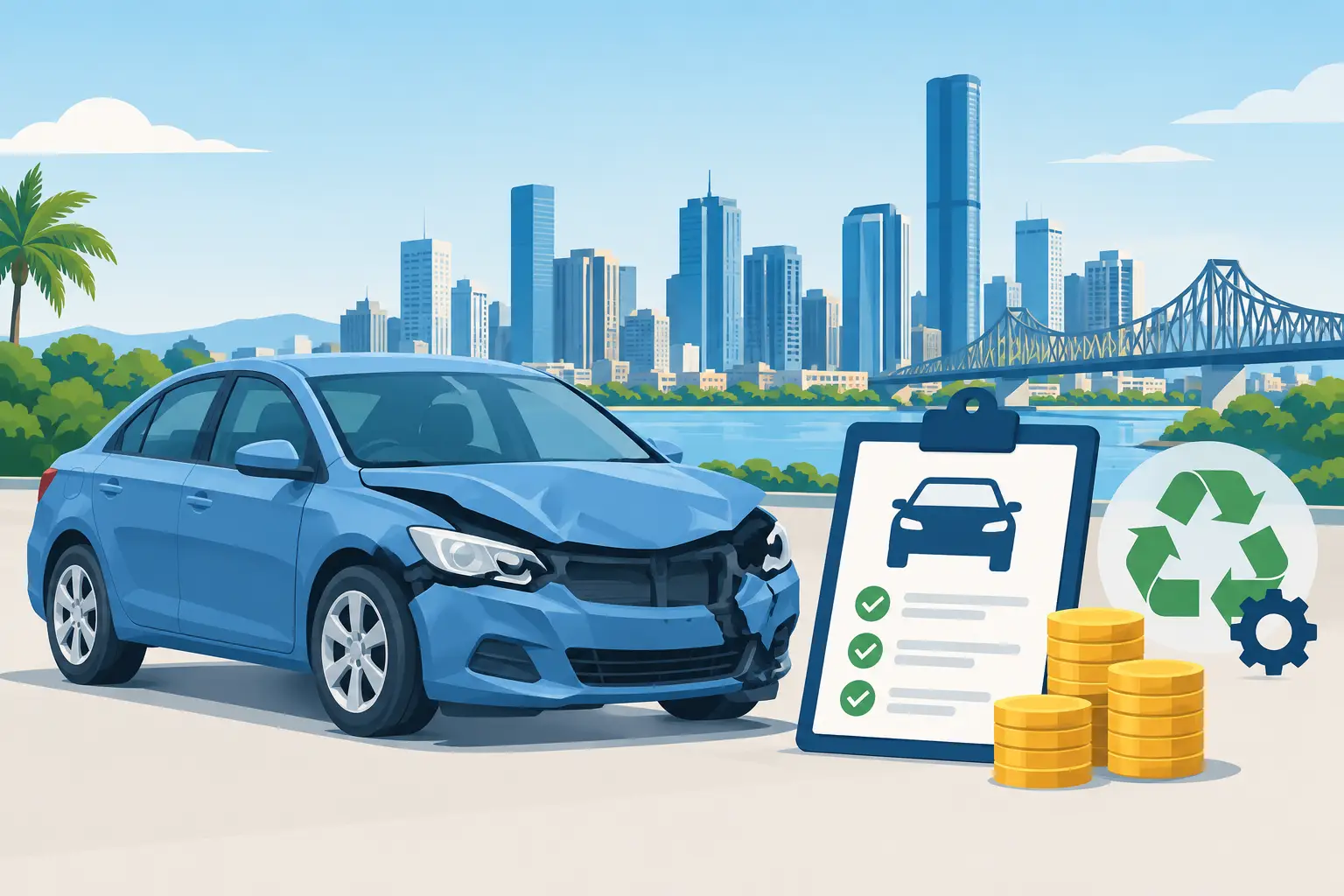
That old car taking up room in the driveway may still be worth more than its appearance suggests. This car salvage value guide explains what buyers look at, what can raise or lower the offer, and how Brisbane owners can turn an unwanted vehicle into cash without paying for towing or chasing private buyers.
For a vehicle that will not start, has failed a roadworthy check, has been in an accident or has sat untouched for years, salvage value is often the number that matters most. It is not about what the car was worth when it was running perfectly. It is about the usable parts, recoverable materials and resale potential that remain now.
What is a car’s salvage value?
Salvage value is the amount a buyer can reasonably pay for a vehicle that is no longer practical to sell as a normal used car. The vehicle may be damaged, unregistered, written off, flood affected, mechanically failed or simply too costly to repair.
A salvage buyer assesses what can be recovered from it. That could include the engine, gearbox, panels, wheels, interior components, electrical parts, catalytic converter and scrap metal. A late-model accident-damaged car may have strong value because its parts are in demand. An older rusted vehicle may be valued mainly for metal weight and any reusable components.
This is different from an insurance settlement figure. Insurers use their own assessment process and policy terms. A cash salvage quote is based on the vehicle’s current condition and the realistic value of dismantling, recycling or repairing it.
What affects salvage value in Brisbane?
There is no fixed price for every scrap or damaged car. Two similar-looking vehicles can receive very different offers depending on their make, condition and what is still intact.
Make, model and year
Popular makes and models usually have better salvage potential because there is steady demand for second-hand parts. A common Toyota, Mazda, Holden, Ford, Hyundai or Nissan may have useful components that can be tested and resold. Utes, vans and work vehicles can also hold good value where trays, drivetrains, diesel engines or commercial parts are recoverable.
Newer vehicles can be worth more even with major accident damage. Their electronics, safety components, wheels, lights and interior parts may still be usable. That said, age is not the only factor. A clean older 4WD with a sound engine can be worth more than a newer vehicle with severe flood damage.
Mechanical condition
A running vehicle generally attracts a stronger quote than one that cannot be started, but non-running does not mean worthless. Buyers will want to know whether the issue is a flat battery, failed starter, overheated engine, transmission problem or accident damage.
Be honest about faults. A clear description helps you receive a realistic quote upfront and avoids surprises when the vehicle is collected. If the motor starts, mention it. If the gearbox slips or the engine has seized, mention that too. A straightforward assessment is faster for everyone.
Damage type and severity
Accident damage affects value differently depending on where the impact occurred. A rear-end collision may leave the engine, bonnet, front panels and cabin in good condition. A front-end impact may still leave valuable rear panels, doors, wheels and interior parts.
Flood damage can reduce the value of electrical systems and interior components, particularly if water has reached the dashboard or engine. Hail damage is often less serious for salvage because mechanical parts may be untouched. Fire damage, major rust and missing panels usually reduce the amount of reusable material.
What is still on the vehicle
A complete car is usually easier to value than one that has already been stripped. Wheels, battery, catalytic converter, engine, gearbox, doors, seats, mirrors and factory electronics all contribute to the final assessment.
If someone has removed the wheels, drained fluids, taken the battery or stripped the interior, say so before requesting a quote. It does not stop a buyer from taking the vehicle, but it may change the offer. Clear information protects you from wasting time.
Metal prices and parts demand
Salvage prices can move with the market. Steel, aluminium and other metal values change over time, while demand for specific parts rises and falls. A model that is common on Queensland roads may be valuable to wreckers because owners are looking for affordable replacement parts.
Location matters as well. A buyer collecting from Brisbane, Ipswich, Logan, Caboolture or the Gold Coast must account for transport and handling. A genuine free-removal service should make this clear without adding last-minute towing charges.
How to get an accurate salvage quote
You do not need to spend days researching parts prices or trying to dismantle the car yourself. The quickest way to get a fair offer is to provide the basics accurately: the make, model, year, registration status, location and a plain description of the problem.
Photos can help, especially for crash damage, hail marks, missing parts or heavy rust. Include photos of the front, rear, both sides, interior and any obvious damage if possible. If the car has been sitting in a tight garage, on a lawn or behind another vehicle, mention access details as well. A tow truck needs safe room to load it.
Have your proof of ownership and photo identification ready before collection. If the vehicle is still registered, keep the registration details handy. For an unregistered vehicle or repairable write-off, the paperwork requirements may differ, so it is best to raise this at the time of the quote rather than on pickup day.
Don’t let repair costs decide the whole story
Many owners assume that a car with a blown engine or smashed front end is only worth scrap metal. Sometimes that is true. Often, it is not.
Before authorising expensive repairs, compare the repair estimate with the vehicle’s likely sale value once fixed. A $4,000 repair bill on an older car worth $5,000 may not make sense, particularly if other faults are likely to follow. On the other hand, a newer vehicle with minor cosmetic damage may be worth repairing or selling privately.
The right option depends on your situation. If you need reliable transport and the repair is reasonable, fixing the vehicle can be worthwhile. If it is unregistered, unreliable, taking up space and costing more every month, selling it for salvage can be the cleaner decision.
Private sale, scrap yard or cash car buyer?
A private sale may bring more money when the vehicle is roadworthy, presentable and likely to attract buyers. But it also means cleaning it, taking photos, writing advertisements, answering messages, arranging inspections and dealing with no-shows. For a damaged or non-running car, that process can drag on.
Taking a vehicle to a scrap yard can work if you have access to a trailer or tow truck and know exactly where to go. For most people, transport is the issue. Paying to move a car can quickly eat into the amount you receive.
A car removal buyer is usually the practical choice when speed and convenience matter. Top Cash Car Buyers can assess unwanted cars, utes, vans, trucks and buses in any condition, arrange free collection and pay on the spot. No advertising, no towing bill and no need to get a dead vehicle back on the road just to sell it.
Car salvage value guide: simple steps to sell
The process should be simple. First, provide the vehicle details and location for a quote. Next, agree on a pickup time that suits you. Finally, complete the paperwork, receive payment and let the removal team take the vehicle away.
Before collection, remove personal belongings from the glove box, centre console, boot, door pockets and under the seats. Take out your toll tag, parking permits and any paperwork you want to keep. If you have spare keys, service books or accessories that belong with the car, have them ready.
Do not worry about washing or detailing a true salvage vehicle. Buyers need an honest view of its condition, not a polished sales pitch. Your time is better spent confirming ownership documents and making sure the car is accessible for pickup.
A broken-down vehicle does not need to become a permanent fixture in your driveway. Get a clear quote, ask whether towing is 100% free, and choose a pickup time that gets the problem off your hands without another costly repair bill.