
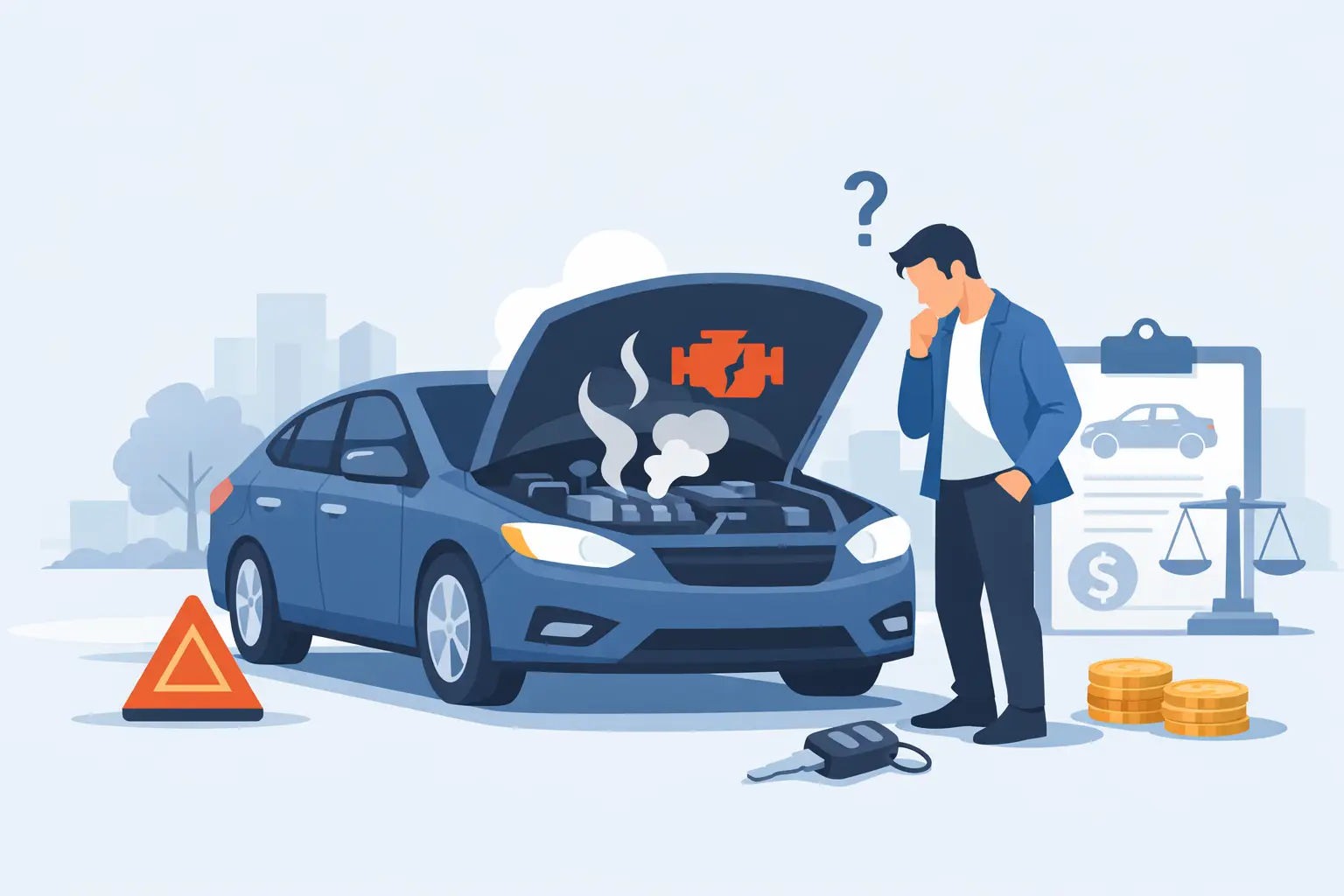
Your car will not start, the mechanic has given you a repair bill that makes no sense, and now you are stuck asking the question: can I sell a car with engine failure? The short answer is yes. A blown motor, seized engine or major internal damage does not stop you from selling a vehicle in Queensland. It just changes who will want to buy it, how much it is worth, and how quickly the sale can happen.
For most owners, engine failure is the point where keeping the car stops being practical. Once the repair cost starts pushing into the thousands, private buyers lose interest fast. Dealerships usually offer very little, if they offer anything at all. That is why many sellers look for a direct car buyer who takes damaged and non-running vehicles as-is.
Can I sell a car with engine failure in Queensland?
Yes, you can sell a car with engine failure in Queensland, even if it is not drivable, unregistered, damaged or sitting at home taking up space. There is no rule saying a vehicle must be roadworthy or mechanically sound to be sold. What matters is that you are honest about its condition and can show that you have the right to sell it.
If the engine is gone, you are generally selling the car based on its remaining value. That value may come from the body, transmission, wheels, panels, catalytic converter, battery, interior, salvageable parts, scrap metal, or simply the resale potential for someone prepared to repair it. In other words, the engine may have failed, but the whole car is not automatically worthless.
This is where sellers often waste time. They assume no one will buy the car, leave it sitting in the driveway for months, and keep paying rego, storage or towing costs later on. The smarter move is to get a price based on the vehicle as it stands now.
What kind of engine failure can still be sold?
Almost any kind. Buyers who specialise in unwanted vehicles regularly purchase cars with blown head gaskets, cracked engine blocks, timing chain failure, overheating damage, oil starvation, seized motors and complete non-start situations.
Some failures are minor enough that a repairer or hobby buyer may still want the car. Others mean the vehicle is better suited for wrecking or recycling. Either way, there is still a market for it. The difference is in the value.
A late-model vehicle with engine damage but a clean body and good interior can still attract a decent offer. An older car with high kilometres, worn tyres and cosmetic damage will usually be valued more for parts and scrap. That is normal. Condition, age and demand all matter.
What affects the value of a car with engine failure?
The biggest factor is whether the rest of the vehicle still has usable value. A failed engine does hurt the price, but it is not the only thing a buyer looks at.
Age, make, model and kilometres all play a part. So do accident history, body damage, rust, missing parts and whether the car is complete. If the gearbox, panels, wheels, electronics and interior are in reasonable condition, that can help support the offer. Popular makes and models also tend to hold more salvage value because there is more demand for second-hand parts.
Registration status can matter too, but not always in the way people think. An unregistered car can still be sold. It simply limits the pool of buyers and changes how pickup is handled. If the vehicle cannot be driven, free towing becomes far more important than rego.
Location also affects convenience. If you are in Brisbane, Logan, Ipswich, Caboolture or the Gold Coast, a local buyer who can collect the vehicle quickly often saves you more money and stress than chasing a slightly higher figure from someone who expects you to organise transport.
Private sale or car buyer – which makes more sense?
If you have time, mechanical knowledge and patience, you can try a private sale. But for a car with engine failure, this is usually the hardest path. Most private buyers want a running vehicle. The few who will consider a non-runner tend to bargain hard, ask endless questions, and expect you to arrange inspections, photos, towing details and paperwork.
That process can drag on for weeks. Meanwhile, the car is still sitting there, and every conversation starts with the same problem: why would someone buy a car that needs an engine?
A direct car buyer is usually the faster option because they already deal with damaged, unwanted and non-running vehicles every day. They understand what the car is worth in its current condition, they can collect it from your home or work, and the process is far more straightforward. For owners who want a quick result with no hidden surprises, this is usually the better fit.
How to sell a car with engine failure without the run-around
The easiest way is to be upfront from the start. Tell the buyer the vehicle has engine failure and give the clearest description you can. You do not need to be a mechanic. Just explain what happened. For example, say whether it overheated, stopped running, has a knocking sound, will not crank, or was diagnosed with a blown head gasket or seized motor.
You should also have the basic details ready: make, model, year, kilometres, registration status and suburb. If there is other damage, mention that as well. Honest information helps you get a more accurate quote and avoids back-and-forth later.
If you accept an offer, the next step is usually pickup and paperwork. A reliable buyer will keep this simple. That means no towing charge, no surprise deductions on arrival, and no expectation that you somehow get a dead car to them yourself. Three steps and it is over should be the goal.
Can I sell a car with engine failure if it is unregistered or not running?
Yes. This is one of the most common situations. In fact, many vehicles with engine failure are already off the road by the time the owner decides to sell. They may be parked at home, at a mechanic, in a unit complex car park or in a business yard.
A non-running car is not a problem for the right buyer. What matters more is access for collection and proof of ownership. If the vehicle is boxed in or missing wheels, mention that early. It does not always stop the sale, but it helps the buyer plan the right equipment.
If the car is unregistered, you can still sell it. You may just need to complete the required paperwork properly and remove the plates if necessary. The main point is that being unregistered or undriveable does not stop the transaction from happening.
What should you avoid when selling a car with engine damage?
The first mistake is spending more money than the car is worth. Owners often pay for towing to a workshop, diagnostic fees and partial repairs, only to discover the engine replacement cost is far above the vehicle’s real market value. At that stage, the money is gone and the problem is still there.
The second mistake is advertising the car privately with vague wording. If buyers arrive expecting a simple issue and find major engine failure, the sale falls apart. Clear descriptions save time.
The third mistake is chasing a quote that sounds high but comes with strings attached. If a buyer talks about possible towing fees, changing the offer on arrival, or making the process complicated, that is usually a sign to move on. A proper service should be clear from the start.
When is selling the smarter move than repairing?
It depends on the car. If it is relatively new, low in kilometres and otherwise in excellent condition, repair might still make financial sense. But once the car is older, has other faults, or the engine job runs into several thousand dollars, selling often becomes the more practical option.
This is especially true if you were already thinking of upgrading, the vehicle has become unreliable, or you simply cannot justify pouring more money into it. Many owners reach the same point: they are not emotionally attached to the car anymore, they just want it gone without drama.
That is exactly why services like Top Cash Car Buyers exist. Instead of wasting weekends with tyre-kickers, towing headaches and lowball offers, you can move the vehicle on as-is, get paid, and clear the space.
If your engine has failed, do not assume you are stuck with a worthless car. You can still sell it, and in many cases, the fastest option is also the least stressful. Get a fair quote, make sure pickup is 100% free, and choose the path that lets you move on today instead of dealing with the same problem next month.