
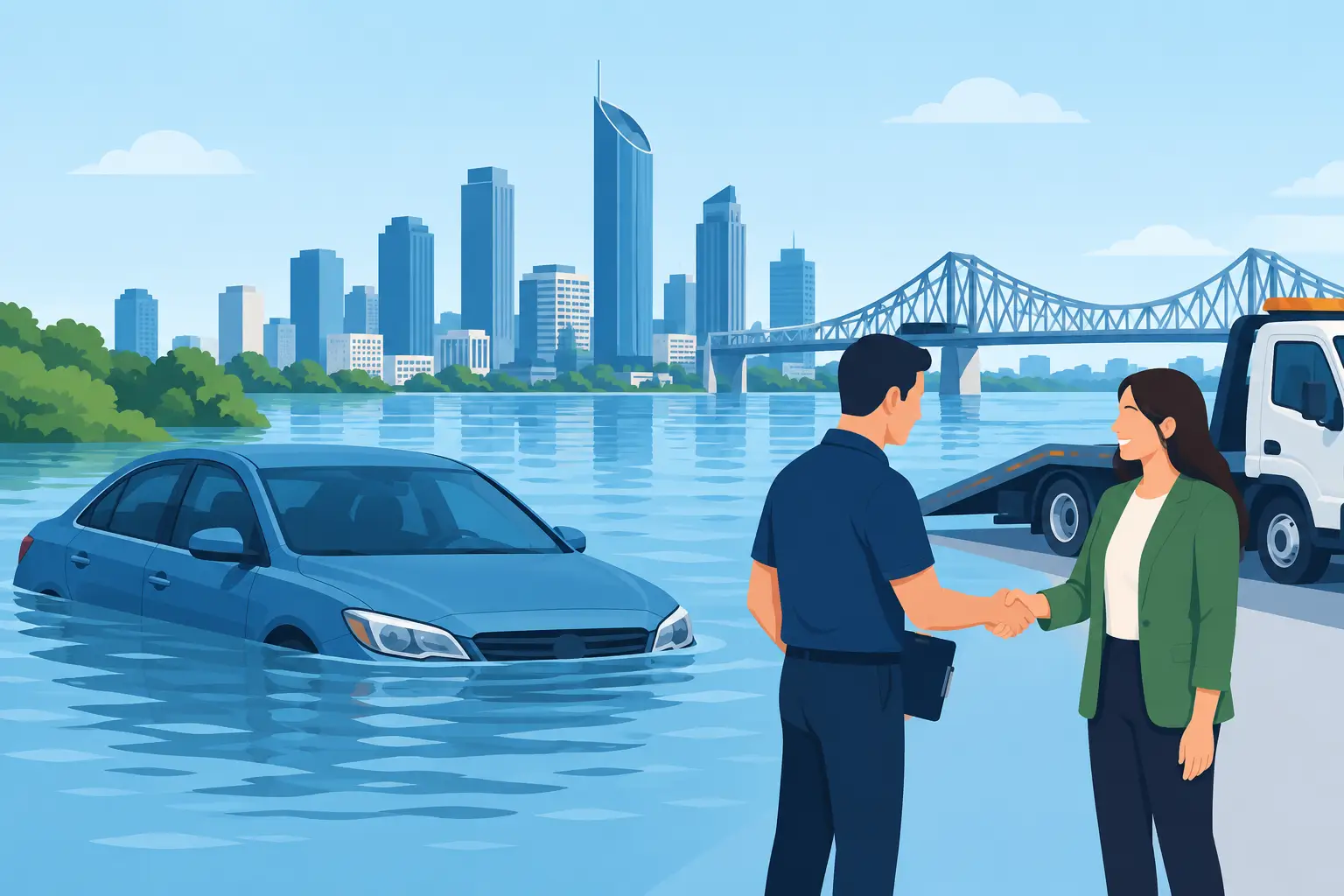
A flooded car can turn from useful transport into a stressful driveway problem in one storm. Water may have reached the carpets only, or it may have affected the engine, wiring, safety systems and interior. Either way, the best ways to sell flooded vehicles start with being upfront about the damage and choosing a sale option that suits the vehicle’s real condition.
For many Brisbane and South East Queensland owners, repairing a water-damaged car is not worth the cost or uncertainty. Selling it privately can take time and attract difficult negotiations. A direct cash buyer can be the faster option when you want the vehicle gone, the towing sorted and payment handled without more hassle.
Assess the flood damage before you set a price
Do not assume a vehicle is a total loss just because it has been wet. Minor water exposure that was dealt with quickly may be repairable. But if water entered the cabin, engine bay or electrical systems, the risk rises sharply. Modern vehicles have sensors, control modules, airbags and wiring throughout the body. Corrosion can cause faults weeks or months after the floodwater has gone.
Start by recording what happened. Note how high the water rose, whether the vehicle was running at the time, how long it sat in water and what has been done since. Take clear photos of the interior, under the bonnet, the boot, seats, carpets and any visible mud or water lines. This gives buyers a clearer picture and helps avoid arguments later.
A mechanic’s inspection can be worthwhile if you believe the car has genuine repair value. Ask for an assessment of the engine, transmission, electrical system, brakes, airbags and safety-related components. If the repair quote is close to, or more than, the vehicle’s value, selling it for salvage or parts is usually the sensible call.
Best ways to sell flooded vehicles without wasting weeks
The right method depends on the vehicle’s age, make, condition and likely repair costs. A newer vehicle with low-level water exposure may still appeal to a repairer. An older car with major electrical faults is normally better suited to a wrecking or removal service.
Sell privately, with full disclosure
A private sale can sometimes bring the highest price, particularly for a repairable vehicle with desirable features. It also asks the most of you. You will need to advertise it, answer calls, arrange inspections, negotiate and deal with buyers who may walk away once they see the damage.
Be direct in the advertisement. State that the vehicle has flood or water damage, explain the known faults and avoid claims you cannot prove. Never hide damp carpets, warning lights, corrosion or starting problems. Apart from being unfair to the buyer, concealing damage can create a serious dispute after the sale.
Private sale works best when the car is safe to inspect, you have time to wait for the right buyer and you can provide useful details about the damage. It is rarely the easy option for a non-running vehicle blocking the garage or sitting on the verge after a storm.
Sell to a repairer or vehicle trader
Specialist repairers may buy a flood-damaged vehicle if they can source parts, complete the work economically and sell it within the relevant requirements. This can be a reasonable middle ground for later-model cars, utes, vans and 4WDs with a solid body and manageable damage.
The trade-off is that they will factor repair risk into their offer. Water damage is unpredictable, and a buyer taking on that risk will not value the vehicle as though it is clean and roadworthy. Get more than one quote where practical, but be wary of anyone who gives a high figure over the phone and then tries to slash it when they arrive.
Sell it for parts, scrap or recycling
Even a car that will not start can have value. Wheels, panels, engines, gearboxes, doors, seats, alloy parts and other recoverable components may be useful. Metal also has recycling value. This is why a flooded vehicle is not automatically worthless, even if repairs no longer make financial sense.
Selling for parts or recycling is often the most practical choice for cars with deep water exposure, mould, damaged electronics or a written-off status. You avoid pouring money into diagnostic work simply to find more faults later.
Use a cash car buyer with free removal
If you need the vehicle removed quickly, a direct buyer is often the simplest answer. Top Cash Car Buyers purchases damaged, unwanted and flood-affected cars, utes, vans, trucks and buses across Brisbane and surrounding South East Queensland areas. The process is built for vehicles that are difficult to sell through normal channels.
You provide the vehicle details and condition, receive an offer, agree on a pickup time and hand over the vehicle with the required paperwork. Free towing means you do not need to organise a tilt tray or pay to move a non-running car. Payment is made on collection, so there is no waiting around for a private buyer to arrange finance or return for another inspection.
This option may not always produce the same figure as a successful private sale of a lightly damaged, desirable car. What it does offer is speed, certainty and no towing bill. When a flooded vehicle is taking up space and you want a clean finish, those benefits matter.
Have the paperwork ready before collection
A straightforward sale moves faster when your documents are organised. Requirements can vary with the vehicle and its registration status, but have these details ready before accepting an offer:
- photo identification and proof you are authorised to sell the vehicle
- registration details, if the vehicle is registered
- the VIN and number plate details
- any information about insurance claims, write-off status or finance owing
If you have an insurance payout or the vehicle has been assessed after flooding, keep the relevant paperwork. Tell the buyer if the car is unregistered, has been recorded as a write-off or has finance attached. A legitimate buyer needs accurate information to complete the transaction properly.
Remove your personal belongings too. Check the glove box, centre console, door pockets, boot, under-seat storage and any mounted phone holders. Take off toll tags and reset connected apps or infotainment profiles where possible. If the car still starts, delete saved addresses, contacts and garage remote codes.
Avoid the mistakes that reduce your return
The biggest mistake is spending thousands on repairs before knowing whether the vehicle can be restored safely and economically. Floodwater can leave hidden problems in connectors, looms and modules. A fresh interior clean and a working engine on one day do not guarantee long-term reliability.
Do not try to dry out the car and present it as normal. Buyers who know vehicles can spot water staining, silt in hard-to-reach areas, rust under seats and unusual electrical behaviour. Honest details protect you and help the buyer make a realistic offer.
It also pays to get the vehicle collected promptly. Damp interiors can develop mould and odours fast in Queensland heat. Leaving the car for months can worsen corrosion, flatten the battery, damage tyres and make the vehicle harder to move. If it is parked on a public street, check that it is legally parked and safe while you arrange removal.
Choose convenience when the car has become a burden
A flooded vehicle does not need to become a long-running project. If it has modest damage and clear repair potential, a disclosed private or trade sale may make sense. If the damage is severe, the car will not drive or you simply want it gone this week, free collection and an on-the-spot offer can save a lot of time.
Be honest about the condition, keep the paperwork ready and choose the sale route that gives you a fair result without more repair bills, towing costs or driveway clutter.