
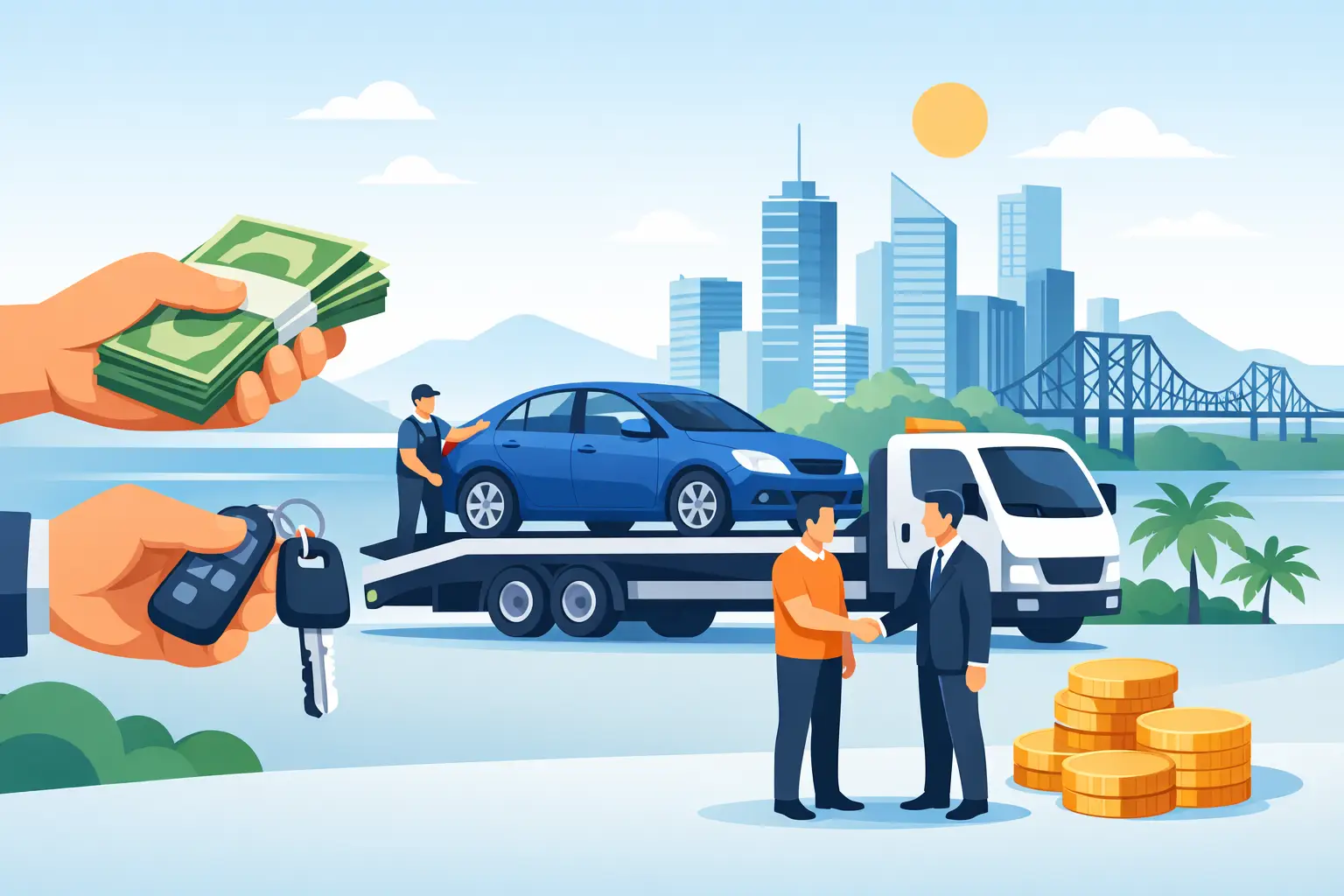
A proper cash for cars service review is not about who makes the loudest promise. It is about whether the buyer turns up when they say they will, removes your vehicle for free, pays the agreed amount, and handles the handover without making a simple job difficult.
For Brisbane and South East Queensland owners, that matters when an old car is taking up the driveway, a damaged ute cannot be driven, or an unregistered van has become one more job on the list. A good service should get the vehicle gone quickly and put cash in your hand without advertising it, arranging inspections, or organising a tow truck yourself.
What a cash for cars service review should cover
The best reviews look beyond a headline cash offer. A quote can sound great over the phone, but the real test is what happens at pickup. Is towing genuinely free? Is payment made on the spot? Are there surprise deductions because the car does not start, has panel damage, or is missing registration?
A dependable buyer asks clear questions before quoting. They will usually want the make, model, year, condition, location, and whether the vehicle is complete. If it has accident damage, mechanical faults, flood damage, hail damage, or has been sitting for years, say so upfront. Accurate information helps the buyer make a realistic offer and avoids a frustrating price change later.
The service is not always about getting the highest possible dollar figure. A private sale may bring more for a late-model, roadworthy car in strong demand. But it also means cleaning it, taking photos, paying for advertising, replying to messages, arranging test drives, and dealing with people who do not show up. For a non-running, written-off, unregistered, or badly damaged vehicle, a direct cash buyer is often the more practical option.
The signs of a service worth using
A solid vehicle removal service makes the process easy to understand from the first call. You should know what the offer includes, when pickup can happen, and what you need to provide. There should be no vague wording around towing fees, collection charges, or payment timing.
The quote matches the real condition
Fairness starts with honesty on both sides. If you describe your car as running but it has a seized engine, expect the final value to be different. On the other hand, if you clearly explain that the vehicle is not running and the buyer agrees to a price, that price should not suddenly be reduced at your door without a genuine reason.
The value of an unwanted vehicle usually comes down to its age, demand for parts, weight, metal value, engine and gearbox condition, and the cost of transport and processing. A Toyota, Ford, Holden, Mazda, Hyundai, Isuzu, Nissan or Mitsubishi may still have useful recoverable parts even if it is not roadworthy. Trucks, buses, vans and utes can also hold value for parts, scrap metal, or repair.
Be cautious if a buyer gives an unusually high quote with almost no questions. It can be a sign that the number is only there to get a booking. A reasonable quote based on proper details is more useful than an inflated promise that disappears once the tow truck arrives.
Free towing means free towing
For most sellers, collection is where the convenience starts. If your vehicle cannot be driven, you should not have to find a trailer, pay a towing company, or risk moving an unsafe car on the road. A genuine cash-for-cars service arranges removal from your home, workshop, workplace, car park, or roadside location where safe and legal to do so.
Ask directly whether the quote includes towing from your suburb. This is particularly useful for owners outside central Brisbane, including Ipswich, Logan, Caboolture, the Gold Coast and surrounding South East Queensland areas. Distance can affect scheduling, but it should not become a hidden bill after you accept an offer.
Payment happens at collection
Instant payment is one of the main reasons people choose this type of service. Once the buyer has inspected the vehicle and confirmed it matches the description, payment should be made at pickup. That gives you certainty before the vehicle leaves your property.
Clarify the payment method when booking. Whether it is cash or an agreed electronic transfer, you should understand exactly when the funds will be received. Do not hand over keys or paperwork on the basis of a promise that payment will be sorted out later.
Paperwork is straightforward
Selling an unwanted vehicle should not turn into a paperwork headache. You may need photo identification and proof that you are authorised to sell the vehicle. If you have registration documents, service records, or ownership paperwork, keep them handy. If the car is unregistered or the paperwork is limited, explain that before booking.
Remove personal items from the glovebox, centre console, boot, door pockets and under the seats. Check for toll tags, parking permits, work equipment, child seats and old documents. Take your number plates off if required for your situation, and make sure you understand your responsibility for cancelling registration or updating records with the relevant authorities.
Where cash-for-cars services are strongest
This service suits vehicles that are no longer worth the time or money needed for a private sale. A family car with a failed transmission, a flood-damaged SUV, a hail-damaged sedan, an old work van, or a ute with major accident damage can all become costly to keep. Storage takes space, repairs add up, and every month it sits there is another month it is doing nothing useful.
It is also a good fit when speed matters. Perhaps you are moving house, clearing a deceased estate, replacing a work vehicle, or need a damaged car removed from a mechanic’s yard. Same-day or next-day pickup can be far more valuable than spending weeks chasing a private buyer.
There are trade-offs. If your vehicle is tidy, registered, running well and popular on the used market, selling privately may be worth the effort. If it needs expensive repairs, cannot be test-driven, or has been written off, a direct buyer removes the uncertainty. The right choice depends on the car’s condition and how much time you are willing to spend selling it.
Why responsible recycling matters
An unwanted vehicle is not just a lump of scrap. It contains steel, aluminium, batteries, tyres, fluids, glass, wiring and parts that may still be useful. A responsible buyer sends vehicles through appropriate wrecking, recycling and salvage channels instead of treating every old car as rubbish.
Usable components may be recovered for resale, while materials can be processed for recycling. That reduces waste and gives a final purpose to vehicles that are beyond economical repair. It also gives owners a better alternative to leaving an old car deteriorating in the yard.
Top Cash Car Buyers focuses on this practical approach: assess the vehicle, arrange free removal, pay at collection, and move it into the right salvage or recycling pathway. The point is not to make a difficult sale sound complicated. It is to get the job done properly.
Questions to ask before you book
Before accepting any offer, get clear answers on the price, pickup time, towing cost, payment method and paperwork. Tell the buyer about every major issue you know about, including missing parts, flat tyres, accident damage, or access problems such as a locked garage or tight driveway.
It is also sensible to confirm who will be collecting the car and whether they can handle your vehicle type. A small hatchback, a four-wheel drive, a commercial van and a bus do not all need the same towing setup. Good planning prevents delays on the day.
The easiest vehicle sale is the one with no loose ends. Give an accurate description, choose a buyer that puts the full offer and free pickup in plain language, clear your belongings from the car, and keep your identification ready. Then an unwanted vehicle can be off your property and out of your mind far sooner than you expect.