
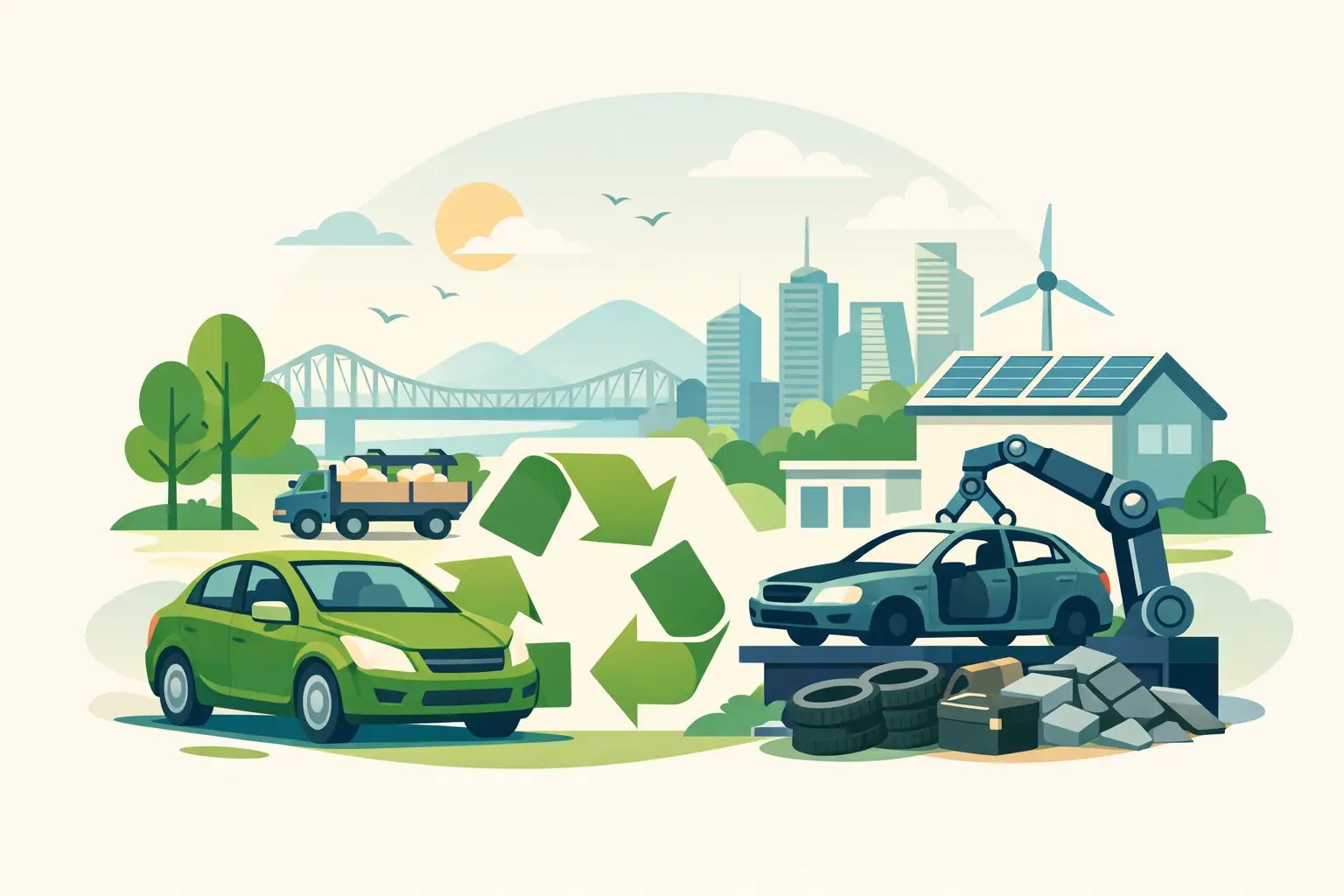
That old car sitting in the driveway is not just taking up space. It is leaking value every day, and if it has been damaged, written off or left unused for months, it can also become an environmental problem. Eco-friendly car recycling Brisbane vehicle owners can rely on is about more than getting rid of a wreck. It is about removing a vehicle safely, recovering usable parts, recycling metal properly, and keeping harmful fluids and waste out of the ground.
For most owners, the real issue is simple. You want the car gone without paying towing fees, chasing buyers, or dealing with people who waste your time. At the same time, you do not want the vehicle dumped, stripped badly, or handled in a way that creates a bigger mess. A proper recycling service solves both problems. It gives you a fast exit and makes sure the vehicle is processed the right way.
What eco-friendly car recycling in Brisbane actually means
A lot of people hear the term and assume it just means crushing old cars for scrap. That is only one part of it. Genuine eco-friendly car recycling in Brisbane starts with controlled removal and ends with responsible material recovery.
First, the vehicle is collected and taken to a yard where it can be assessed safely. Fluids such as engine oil, coolant, brake fluid and fuel need to be drained and handled correctly. Batteries, tyres and other components that cannot just be left in the shell are removed. If usable parts are still in good condition, they can be salvaged and supplied for reuse. After that, the remaining metal body can be processed for recycling.
That matters because a car is not one material. It is steel, aluminium, plastics, rubber, glass, wiring and fluids all packed into one machine. If it is dumped, abandoned or stripped carelessly, those materials do not just disappear. Some can be reused. Some can be recycled. Some need controlled disposal. The difference comes down to how the vehicle is handled.
Why more Brisbane owners are choosing recycling over a private sale
If a vehicle still looks decent, many owners try the private market first. Sometimes that works. Often it drags on for weeks. You pay for ads, answer messages at all hours, haggle with strangers and deal with no-shows. If the car is unregistered, damaged, flood-affected or not running, the process gets even harder.
That is where car recycling becomes the more practical option. It is not about pretending a dead vehicle has showroom value. It is about getting a fair offer based on the car’s parts, metal and condition, then having it removed without extra cost. For plenty of Brisbane households, tradies and small business owners, that is the better deal because it saves time, towing expense and stress.
There is also the environmental side. A private buyer may or may not repair the car properly. An abandoned vehicle often gets worse sitting in the weather. Recycling moves the vehicle into a proper end-of-life process instead of leaving it to rot in a yard, on a worksite or under a carport.
What happens to your vehicle after pickup
People often ask what recycling actually looks like once the car leaves the property. The short answer is that the useful parts are separated from the waste, and the waste is kept under control.
If the engine, gearbox, panels, mirrors, alternator, radiator or interior components still have life in them, those items may be removed for resale. Reusing parts cuts down the need to manufacture replacements from scratch, which reduces waste and saves resources. Not every part can be saved, of course. A hail-damaged bonnet might still be useful. A flood-damaged electrical system usually is not. It depends on the condition.
After dismantling, the remaining shell is sorted for material recovery. Steel and aluminium are the biggest wins because they can be recycled at scale. Tyres and batteries also need separate processing. The point is not to claim that every single piece is reused. That would not be honest. The point is that a large portion of the vehicle can be recovered when the process is done properly.
Eco-friendly car recycling Brisbane drivers should look for
Not every buyer or removal service handles end-of-life vehicles the same way. If you want genuine eco-friendly car recycling Brisbane wide, there are a few signs that matter.
The first is whether vehicle removal is part of a clear process rather than an afterthought. A business that buys cars, removes them quickly and processes them for salvage and recycling is usually set up for the full job. The second is whether they take vehicles in all conditions. That matters because some operators only want easy stock, while damaged or non-running vehicles are the ones most likely to be dumped or left sitting.
The third is transparency. You should know if towing is free, when payment is made and what paperwork is needed. Straight answers matter. If the process sounds vague, or fees only appear later, that is usually a bad sign.
The types of vehicles that can be recycled
Many owners assume recycling is only for completely dead cars. It is broader than that. Old hatchbacks, unwanted sedans, rusted 4WDs, damaged utes, broken vans, written-off vehicles and even small trucks can all be suitable for recycling. Unregistered vehicles are common. So are cars with failed engines, blown head gaskets, accident damage or flood issues.
Age alone is not the deciding factor. Some late-model vehicles are recycled because repair costs no longer make sense. On the other hand, an older car may still have valuable parts even if it no longer runs. That is why the best services look at the whole vehicle, not just the rego status or odometer.
For owners, this is good news. It means you do not have to guess whether your car is too far gone. If it has value as salvage, scrap metal or parts, it can usually be removed and processed without you doing anything extra.
Why the easiest option is often the best one
A lot of people put off getting rid of a junk vehicle because they expect the process to be painful. They assume they will have to arrange towing, chase documents, compare yards and spend a weekend sorting it out. In reality, a proper service keeps it simple.
You ask for a quote, accept the offer, book the pickup and the vehicle is removed. That is why this option works so well for busy families, tradies and anyone dealing with a car that has already become a headache. You are not trying to squeeze one last private-sale miracle out of a vehicle that is finished. You are solving the problem cleanly and moving on.
Top Cash Car Buyers works in that practical lane. The focus is simple – fair offer, free pickup, quick payment and no hidden surprises. That suits owners who do not want a lesson in wrecking yards. They just want the unwanted vehicle gone today or tomorrow.
What affects the value of a recyclable car
Recycling does not mean every vehicle is worth the same amount. The offer usually depends on make, model, age, weight, condition and which parts are still recoverable. A complete vehicle with intact components may bring more than one that has already been stripped. Popular models can also hold stronger parts value.
Damage type matters too. A rear-end collision is different from flood damage. Fire damage is different again. Sometimes the shell is mostly scrap but the drivetrain still has value. Other times the opposite is true. That is why honest quoting is important. You want a number based on the real vehicle, not a bait price that changes once the truck arrives.
A better outcome than letting it sit
Leaving an unwanted vehicle where it is might feel easier this week, but it rarely gets better with time. Tyres go flat, seals fail, rust spreads and fluids become more of a risk. The car keeps taking up room, neighbours notice it, and eventually you still need to deal with it.
Eco-friendly recycling gives you a cleaner way out. The vehicle is collected, useful materials are recovered, waste is managed properly and you get paid without carrying the cost of removal. That is a better result for your property, your time and the wider environment.
If your car, ute, van or truck is finished, there is no prize for letting it decay another six months. A straightforward recycling service turns a problem vehicle into one less thing to worry about, and that is usually the best kind of progress.