
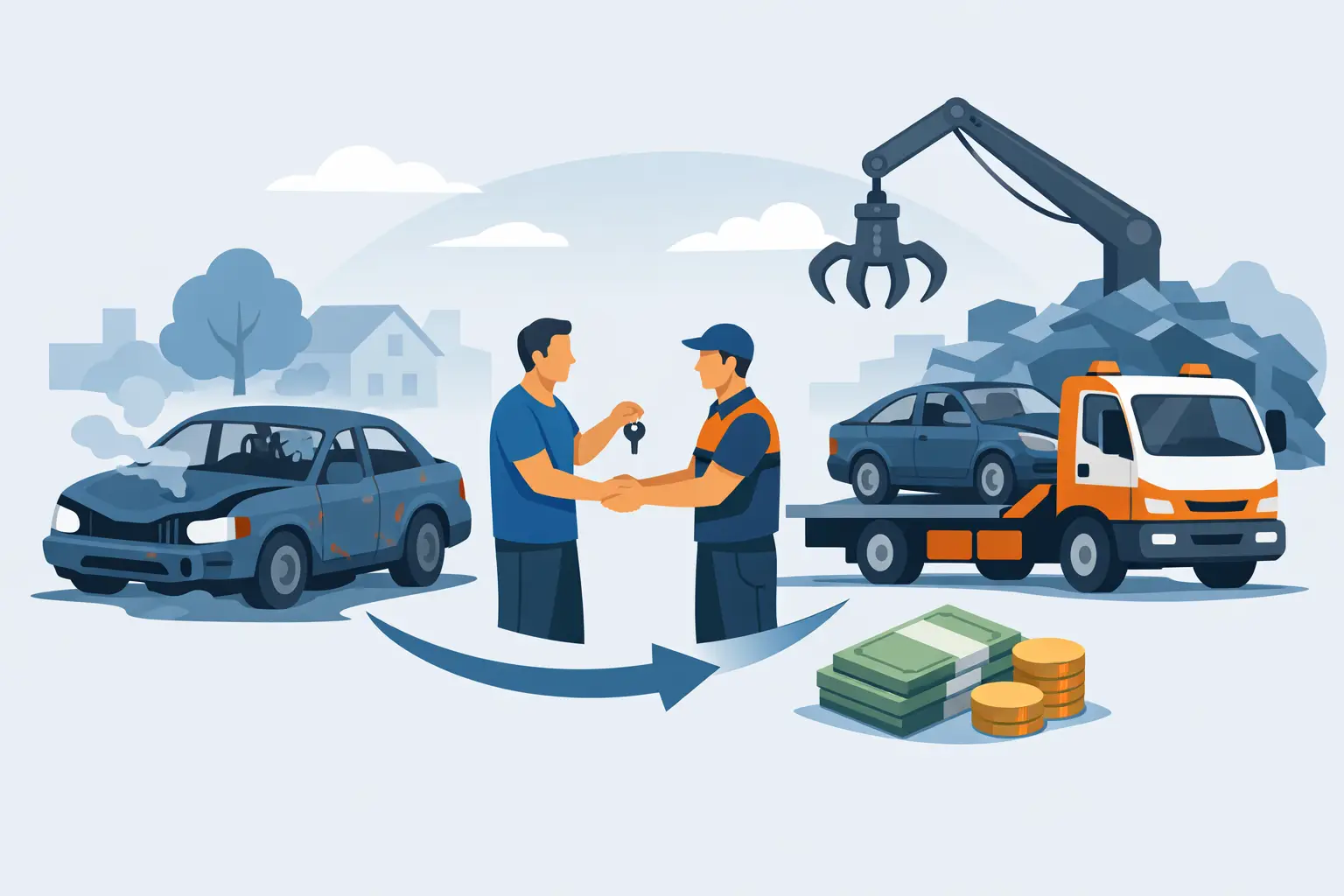
That old car sitting in the driveway is not going to fix itself, gain value, or become easier to deal with next month. If you’re wondering how to dispose of junk vehicle without wasting weekends on tyre-kickers, towing fees, and paperwork dramas, the fastest path is usually the simplest one – sell it to a licensed car removal buyer that takes vehicles in any condition.
For most owners across Brisbane and South East Queensland, the real problem is not just the car. It is the time, space, stress, and cost that come with keeping a dead, damaged, unregistered, or unwanted vehicle on the property. A private sale sounds fine in theory, but it quickly turns into messages that go nowhere, people who never show up, and buyers who want a bargain after you have already cleaned the car and shuffled your day around.
How to dispose of junk vehicle without the usual hassle
A junk vehicle can be anything from a car that no longer starts to a flood-damaged ute, an unregistered van, a written-off work vehicle, or an old family car that costs more to repair than it is worth. The disposal method that makes sense depends on its condition, your timeframe, and whether you want maximum convenience or want to squeeze out every last dollar.
If the vehicle still runs, has current rego, and only needs minor work, a private sale might bring a bit more money. The trade-off is time and effort. You will need to advertise it, answer calls, arrange inspections, negotiate, and often deal with people trying to knock the price down on the spot.
If the vehicle is not roadworthy, unregistered, badly damaged, or simply not worth repairing, a direct car buyer is usually the better option. You get a quote, accept it, book pickup, hand over the vehicle, and get paid. No hidden surprises, no towing bill, and no need to move a car that has not turned over in months.
Your main options for disposing of a junk vehicle
The first option is selling privately. This only really works when the vehicle still has enough life left in it to attract everyday buyers. Even then, you may need a roadworthy certificate, current registration details, and time to present the vehicle properly. If the car looks rough, leaks oil, has body damage, or has been sitting idle, private buyers will either disappear or expect scrap-level pricing.
The second option is trading it in. This can be convenient if you are buying another vehicle from a dealer, but trade-in values for junk vehicles are often low. Dealers are not usually interested in old, non-running, accident-damaged, or unregistered vehicles unless there is some resale value in them.
The third option is wrecking or selling it to a cash-for-cars and removal business. This is often the most practical choice for owners who want the vehicle gone quickly. A proper buyer will assess the make, model, age, condition, damage, and scrap value, then offer a price with towing included. That matters, because towing alone can wipe out a big part of what the vehicle is worth.
The fourth option is taking it to scrap yourself. This can work if you have your own trailer, time to organise transport, and a yard that will accept it. For most people, that is more mucking around than it is worth.
What affects the value of a junk vehicle
Not every junk car is worth the same amount. Even a vehicle that no longer runs can still have value in parts, metal, or salvageable components. Newer vehicles often hold more value because there may be demand for engines, gearboxes, panels, wheels, electronics, or interior parts. Popular makes and models can also attract stronger offers.
Condition matters, but not always in the way owners think. A smashed front end does not automatically mean the vehicle is worthless. If the motor, transmission, catalytic converter, doors, or other components are still usable, there may still be decent value in it. On the other hand, a very old car with severe rust, missing parts, and no demand for spares may sit closer to scrap value.
Location can also make a difference. If you are in Brisbane, Logan, Ipswich, Caboolture, or the Gold Coast, pickup is generally straightforward. The easier the vehicle is to access, the easier it is to remove fast.
How the process usually works
If you want the quickest answer to how to dispose of junk vehicle, the process is generally three steps and it’s over.
First, provide the vehicle details. That usually means the make, model, year, registration status, condition, and whether it starts or drives. Be honest about damage. It saves wasted time and helps you get an accurate quote upfront.
Second, accept the offer and lock in collection. Good removal businesses can often arrange same-day or next-day pickup. That is a big advantage if the car is blocking the driveway, sitting in a unit car park, or taking up room at a worksite.
Third, hand over the vehicle and get paid. The buyer removes the car, handles the basic paperwork, and pays on the spot. If towing is not included, ask before agreeing to anything. A free pickup service is part of what makes this option worth it.
Paperwork and practical details to sort out
Disposing of a junk vehicle is simple, but you still want to do it properly. You should be able to show proof that you own the vehicle or are authorised to sell it. A photo ID and proof of ownership are commonly required. If the rego is current, you may also need to deal with transfer or cancellation requirements under Queensland rules.
Take your personal items out before collection. Check the glove box, centre console, under the seats, door pockets, and boot. Old toll tags, sunglasses, tools, chargers, paperwork, and number plate screws have a habit of hiding in places you forget until the vehicle is gone.
If possible, remove the plates if that is required for your situation, and ask what happens next with deregistration. It depends on whether the vehicle is registered, unregistered, or being sold for wrecking. If you are unsure, ask before pickup. A straightforward buyer should explain it clearly.
Why free removal matters more than people think
A lot of owners focus only on the cash offer, which is fair enough, but towing costs can quietly turn a decent deal into a poor one. A non-running vehicle often needs a tilt tray or specialist towing setup. If you are paying for that separately, the final amount in your pocket can drop fast.
That is why free vehicle removal matters. It keeps the process clean. You get one price, one pickup time, and no surprise charges on the day. For owners with a dead car at home, an old ute on a worksite, or an accident-damaged van that cannot be driven, this is often the difference between solving the problem quickly and dragging it out for another few weeks.
When a private sale is still worth considering
There are cases where selling privately makes sense. If your vehicle is older but still registered, roadworthy, and mechanically decent, you may get more from a private buyer than from a wrecker or salvage yard. That extra return comes at a cost though. You will be handling ads, inspections, no-shows, and price haggling yourself.
For many owners, especially families, tradies, and small businesses, convenience wins. If the car is already a burden, the cleanest move is often the one that removes it fast and pays you on the spot.
Choosing the right buyer in South East Queensland
Not every buyer offers the same service. Some quote high to get your attention, then cut the price at pickup. Some charge towing after the fact. Some only want certain makes or vehicles that still drive. That is where people get caught.
Look for a buyer that takes cars, vans, trucks, buses, and utes in any condition, offers 100% free pickup, explains the process clearly, and gives a fair quote based on real vehicle details. Speed matters, but trust matters just as much. If you need the job done properly, you want a service that turns up when promised and pays what was agreed.
That is why many owners choose businesses like Top Cash Car Buyers. The appeal is simple – fast quotes, free towing, same-day or next-day removal, and instant payment without the usual runaround.
A junk vehicle only gets more inconvenient the longer it sits there. Whether it is damaged, unregistered, written off, or simply past its use-by date, the best disposal option is the one that saves you time, avoids extra costs, and gets it off your hands without a headache. If the goal is quick, clean, and fair, act before it becomes one more job you keep putting off.