
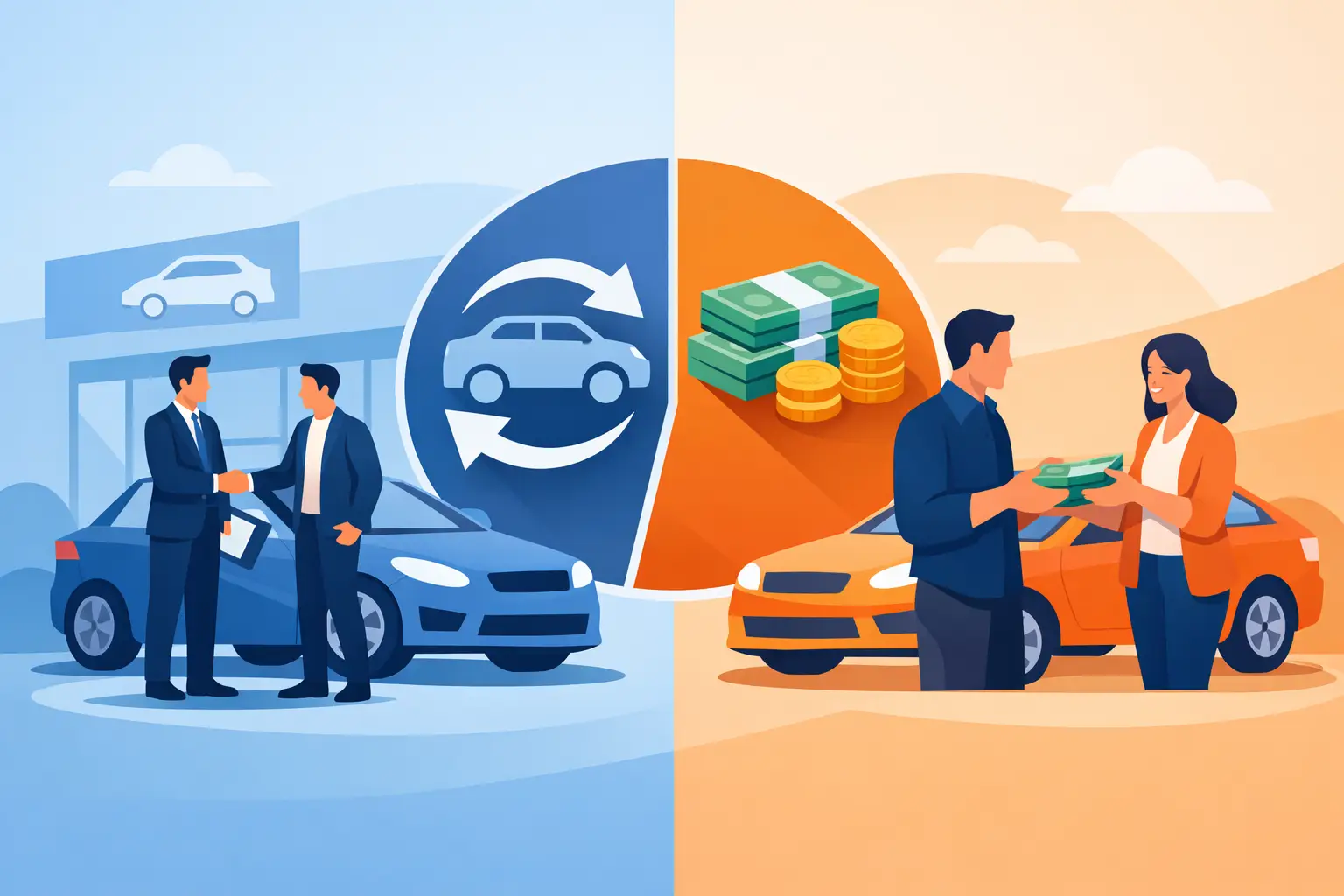
If your car is old, damaged, unregistered or simply costing you space and money, the trade in vs cash for car question matters more than most sellers realise. One option looks easy at the dealership. The other can put money in your hand fast and get the vehicle off your property without the usual run-around. Which one works better depends on your car, your timing and how much hassle you are willing to wear.
A lot of Queensland vehicle owners assume a trade-in is the simplest path because it happens at the same place they are buying their next car. Sometimes that is true. But if your vehicle has mechanical issues, accident damage, flood damage, hail damage, high kilometres or no rego, the numbers often shift quickly in favour of a direct cash sale.
Trade in vs cash for car: the real difference
A trade-in means handing your current vehicle to a dealer as part of another purchase. The value of your old car is applied toward the price of the next one. On paper, that feels tidy. You drive in with one car and leave with another.
Cash for car is different. You sell the vehicle directly to a car buyer or removal company for cash, usually without needing to buy anything else. If the service is set up properly, the quote is quick, pickup is arranged fast, towing is free and payment happens on the spot.
The key difference is simple. A dealer wants your old vehicle as part of a retail transaction. A cash car buyer wants the vehicle itself, whether it is roadworthy or not. That is why the type and condition of the vehicle make such a big difference.
When a trade-in makes sense
If your car is in decent condition, relatively late model and still attractive to a dealer’s used stock, a trade-in can be convenient. It reduces the number of moving parts in the process. You are already at the yard, you are already doing paperwork and you do not need to deal with separate buyers.
This can suit owners who are replacing a family car and want one transaction instead of two. It can also help if the trade-in offer is strong enough and you value speed over squeezing out every last dollar.
That said, convenience has a price. Dealers are not charities. They need margin in the resale. They also know many buyers focus on the repayment or drive-away figure, not the actual value given for the old vehicle. That can make the trade-in look better than it really is.
When cash for car makes more sense
Cash for car usually makes more sense when the vehicle is hard to retail. That includes old cars, non-runners, written-off vehicles, damaged utes, unwanted vans, long-abandoned cars and anything with expensive repairs hanging over it.
In those cases, a dealer may offer very little or refuse the vehicle altogether. If your car is unregistered, has gearbox trouble, engine issues, body damage or has been sitting under a tarp for two years, it is not the sort of stock many dealers want on their lot.
A direct car buyer looks at it differently. The engine, panels, wheels, battery, catalytic converter, scrap metal and reusable parts all have value. Even if the vehicle is not worth repairing, it may still be worth buying. That is where cash for car becomes a practical option, not just a last resort.
Which option usually pays more?
This is the part most people care about. In a clean, late-model vehicle scenario, trade-in and cash sale figures can sometimes be close. But once the vehicle starts showing age, damage or mechanical faults, direct cash buyers often become the stronger option.
Why? Because the dealer is pricing your vehicle around resale risk. If they think it will sit on the yard, need detailing, need workshop time or attract complaints later, they lower the offer. A car removal or vehicle buying business is pricing it around salvage, parts, metal recovery and fast turnover. That gives more flexibility on vehicles the retail market does not want.
It also depends on what you are comparing. Some sellers accept a weak trade-in because it feels wrapped into the new car deal. Others chase a private sale figure in their head and ignore towing costs, time wasters, no-shows and rego issues. The useful comparison is not dream price versus real offer. It is net result versus effort.
The hidden costs people forget
On a trade-in, the hidden cost is often the undervaluation of your vehicle. It may not feel like a cost because no one sends you a separate bill, but if your car is worth more than the allowance you receive, you are still losing money.
On a private sale, the hidden costs are even bigger. You pay with time, stress and uncertainty. You clean the car, take photos, answer messages, organise inspections and negotiate with strangers. If the car is not drivable, you may also need to sort out towing.
With cash for car, the appeal is that the process is built to remove those costs. If pickup is 100% free and the paperwork is kept simple, there is less leakage between the quoted amount and what you actually walk away with.
Trade in vs cash for car for damaged vehicles
This is where the answer becomes much clearer. If the vehicle has been in an accident, has flood or hail damage, is a repairable write-off or has major mechanical problems, the trade-in route usually gets weak very quickly.
Dealers do not want unpredictable stock. They do not want a vehicle that may need transport, extra inspections or major work before resale. Some will still take it, but the offer often reflects worst-case risk.
A cash buyer specialising in unwanted vehicles is built for exactly this kind of job. They can buy the car as-is, pick it up from your home, worksite or roadside location, and pay you without making you spend money first. For owners in Brisbane, Logan, Ipswich, Caboolture and nearby areas, that can be the difference between a vehicle problem dragging on for weeks and it being gone tomorrow.
Speed matters when the car is a burden
A trade-in only works if you are buying another vehicle at the same time. If you are not ready to replace the car, or you just want the unwanted one gone, a trade-in is not much use.
Cash for car is faster in those situations because it is a standalone service. You ask for a quote, accept it, book pickup and get paid. Three steps and it’s over.
That matters when the vehicle is blocking the driveway, taking up room at a business site or attracting council attention because it has been left sitting too long. It also matters when repairs do not stack up and you want cash now, not another round of mechanics, ads and waiting.
Paperwork and practical headaches
A straightforward seller experience is not just about price. It is also about how much work lands back on you. Trade-ins can be simple if the car is standard and the purchase is moving ahead smoothly. But if finance, inspections or valuation disputes creep in, the process can get messy.
Direct vehicle buyers tend to keep it more practical. You provide the details, confirm ownership, agree on the amount and arrange collection. For many owners, especially those dealing with deceased estates, non-running vehicles or old fleet units, that simplicity is worth a lot.
A business like Top Cash Car Buyers is built around that no-fuss model – free towing, fast turnaround and payment on pickup. That is often a better fit for unwanted vehicles than trying to force a bad car into a dealership transaction.
So what should you choose?
If your vehicle is late model, tidy and you are already buying another car, get a trade-in quote. It may suit you, especially if the offer is fair and you want one simple deal.
If your vehicle is old, damaged, unregistered, unwanted or not worth repairing, get a cash for car quote as well. In many cases, that will be the more practical and better-paying option. You are not asking a dealer to do you a favour. You are selling to a buyer whose business is built around cars in exactly that condition.
The smart move is not guessing. Compare both offers honestly, look at the real effort involved and choose the option that leaves you better off, not just busier.
If the car has become dead weight, the best result is usually the one that gives you a fair price, clears the vehicle fast and leaves no hidden surprises behind.