
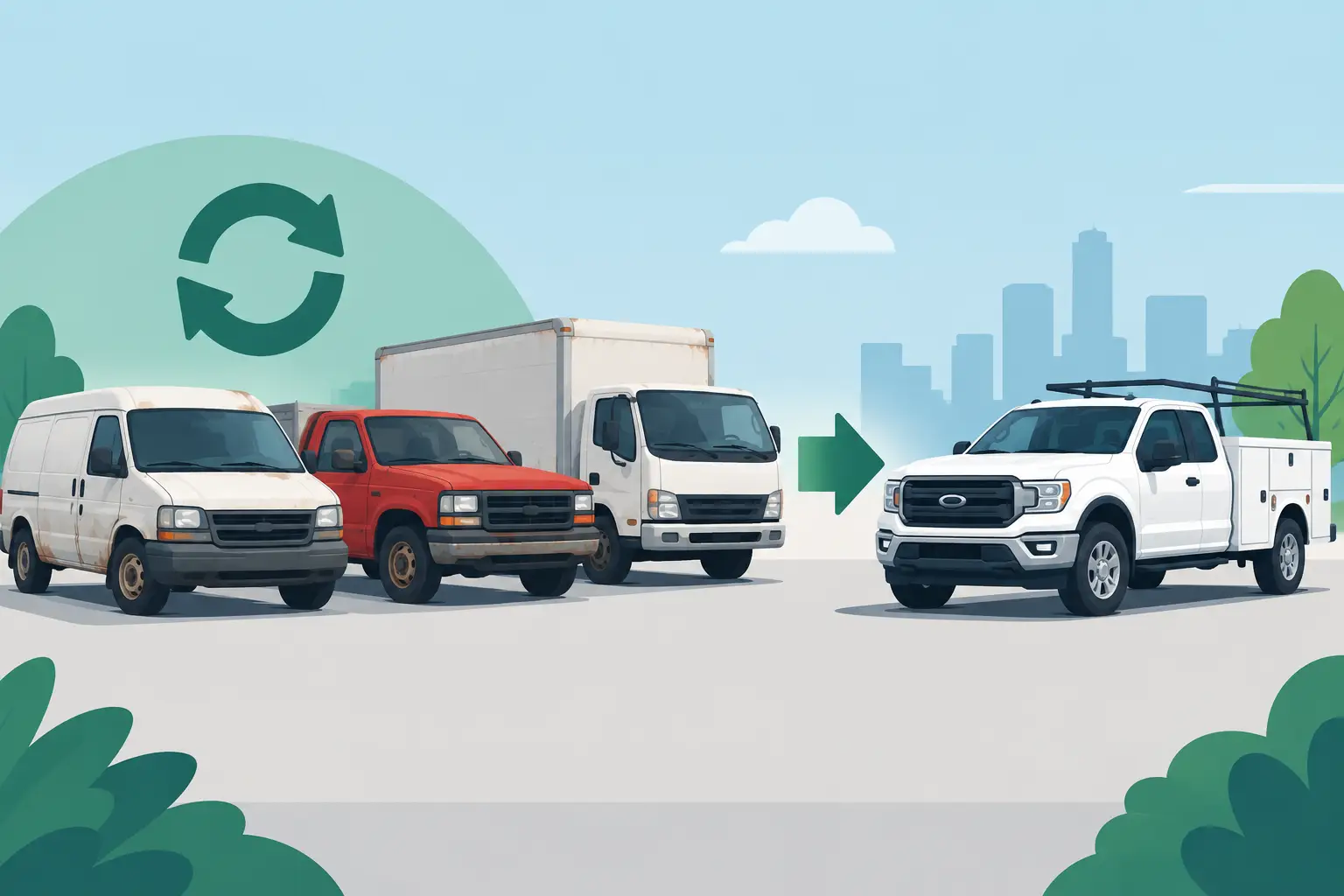
A work vehicle can go from earning its keep to taking up space very quickly. Maybe the ute has a blown motor, the van has failed its roadworthy inspection, or an old truck is sitting behind the workshop collecting dust. The best options for unwanted work vehicles depend on its condition, how quickly you need it gone and whether you are prepared to spend more time or money on it.
For many Brisbane and South East Queensland owners, the right answer is not the option with the biggest possible asking price. It is the option that gets the vehicle off the property without more repairs, advertising costs, tyre-kicking buyers or towing bills.
Start with the real value of the vehicle
Before choosing what to do, be honest about the vehicle’s current state. A running, registered late-model ute with a clean body may still be worth selling privately or trading in. A high-kilometre work van with mechanical trouble is a different story. If it needs thousands in repairs, has been written off, is unregistered or cannot be driven, its value is often in its parts, metal and salvage potential rather than as a ready-to-work vehicle.
Work vehicles can also carry costs that owners overlook. Registration, insurance, repairs, parking space and lost time all add up. Leaving a non-running truck or van in the yard for another six months does not improve its value. It usually creates another job you still have to deal with later.
Your best options for unwanted work vehicles
Sell it privately
Private sale can make sense when the vehicle is roadworthy, presentable and likely to attract a genuine buyer. Tradies, small operators and DIY mechanics often look for used utes, vans and light trucks, particularly when they have service history and are ready to drive away.
The trade-off is time and effort. You need to clean it, take decent photos, write an ad, answer messages and arrange inspections. Buyers may negotiate hard, fail to show up or expect you to fix faults before they commit. If the vehicle has major damage or cannot be driven, a private sale becomes much harder and may require you to organise towing for inspections.
Be clear about its condition. Do not promise a reliable workhorse if the gearbox slips or warning lights are on. Accurate details protect you from arguments and help serious buyers decide quickly.
Trade it in
Trading in can be convenient if you are replacing the vehicle now and a dealer is willing to take it. It removes the need to advertise and can reduce the amount you pay for a newer vehicle.
However, trade-in offers are not always strong for older commercial vehicles, accident-damaged utes or vans with mechanical faults. Dealers generally need a vehicle they can retail or move through wholesale channels. If yours is unregistered, flood-damaged, a repairable write-off or no longer running, the offer may be low or the dealer may decline it altogether.
It is worth comparing the trade-in figure against the cost and convenience of other choices. A simple deal is valuable, but only if the numbers and timing work for you.
Sell through an auction or tender process
An auction can work for certain work vehicles, especially specialist trucks, fleet vehicles, machinery-carrying utes or vehicles with a known commercial market. It can expose the vehicle to buyers beyond your immediate area.
This route is less suitable when you need a guaranteed fast result. Auction fees may apply, there is no certainty the reserve will be met and you may still need to transport the vehicle to the auction site. It also means waiting for a scheduled sale date rather than sorting the problem today.
For a vehicle with good commercial appeal, an auction may be worthwhile. For a battered old van that will not start, it can be more process than it is worth.
Repair it before selling
Repairing an unwanted work vehicle is only sensible when the repair cost is clearly lower than the extra value it creates. Replacing a minor part, fitting a battery or fixing a simple cooling issue may help a usable ute sell more easily. Major engine, transmission, chassis or electrical repairs are another matter.
Get a proper repair quote before spending money. Do not make decisions based on what the vehicle was worth five years ago or what you paid for it. Consider its current age, kilometres, registration status and demand in the market. A $4,000 repair bill on an ageing van is difficult to justify if the finished vehicle may only be worth a little more than that.
If you need it gone quickly, repairs also delay the outcome. Workshops can have waiting times, parts can be hard to source and extra faults can appear once work starts.
Use a cash-for-work-vehicles removal service
For damaged, old, unwanted or non-running commercial vehicles, selling directly to a vehicle buyer is often the most practical option. This is particularly useful for utes, vans, buses, trucks and fleet vehicles that are taking up room but are no longer worth repairing or advertising.
A reputable buyer assesses the vehicle based on its make, model, age, condition, parts and scrap value. You receive a quote, agree on a pickup time and the vehicle is removed with no need to arrange a tow yourself. With Top Cash Car Buyers, the process is designed to be three steps and it is over: request a quote, book collection and receive payment when the vehicle is collected.
This option may not produce the same figure as a successful private sale of a clean, roadworthy vehicle. But it avoids advertising, strangers at your property, repair spending and towing costs. For many business owners and tradies, the saved time is worth more than holding out for an uncertain sale.
Dismantle or recycle it responsibly
If a work vehicle is beyond economical repair, recycling is not simply about getting it out of sight. Commercial vehicles contain valuable steel, aluminium, batteries, tyres, wiring, engines and reusable components. Proper wrecking allows usable parts to be recovered and materials to be processed rather than left to deteriorate in a yard.
This matters with damaged and written-off vehicles. Fluids, batteries and other components need proper handling. Using an established vehicle removal business gives you a clear handover and helps ensure the vehicle is dealt with through appropriate recycling and salvage channels.
When free removal is the smarter call
Free removal is especially valuable when the vehicle cannot be driven. A dead truck, unregistered van or accident-damaged ute may require a tilt tray or specialised towing equipment. Paying separately for transport can quickly reduce what you receive from the sale.
Ask direct questions before agreeing to any collection. Is towing 100% free? Will payment be made on the spot? Is the quote based on the details you provided? What paperwork do you need to have ready? A straightforward buyer should answer clearly, without vague conditions or last-minute surprises.
Have your photo identification and proof of ownership available, and remove personal items, tools, paperwork and toll tags from the cabin, glovebox and trays. If it is a business vehicle, check for old invoices, customer information, fuel cards and equipment before pickup. Once the vehicle leaves, you want the job finished properly.
Choose the option that clears the problem
The right choice comes down to the vehicle’s condition and your priorities. A tidy, running ute may deserve a private sale. A working vehicle being replaced may suit a trade-in. But if the work vehicle is damaged, unregistered, worn out or simply costing you space and attention, fast cash and free removal can be the cleanest solution.
Do not let an unwanted work vehicle become another item on the to-do list. Get a realistic quote, compare the effort involved and choose the option that puts cash in your hand and your space back to use.